What to Look for When Buying a Truck Bed Tent: Complete Buyer’s Checklist
You have done your research. You know how a truck bed tent works, you have weighed your options, and you have decided that sleeping elevated in your truck bed is exactly the kind of camping upgrade you have been looking for.
Now comes the part where most buyers make costly mistakes.
Walking into the truck tent market without a clear checklist is how you end up with a tent that does not fit your bed, leaks on its first rainy night, or collapses in a moderate breeze. There are dozens of options at every price point, and the differences between a great truck tent and a frustrating one are not always obvious from a product photo or a bullet point list.
This guide gives you a complete, honest buyer’s checklist, every factor you need to evaluate before spending a single dollar, so your first truck tent purchase is also your best one.
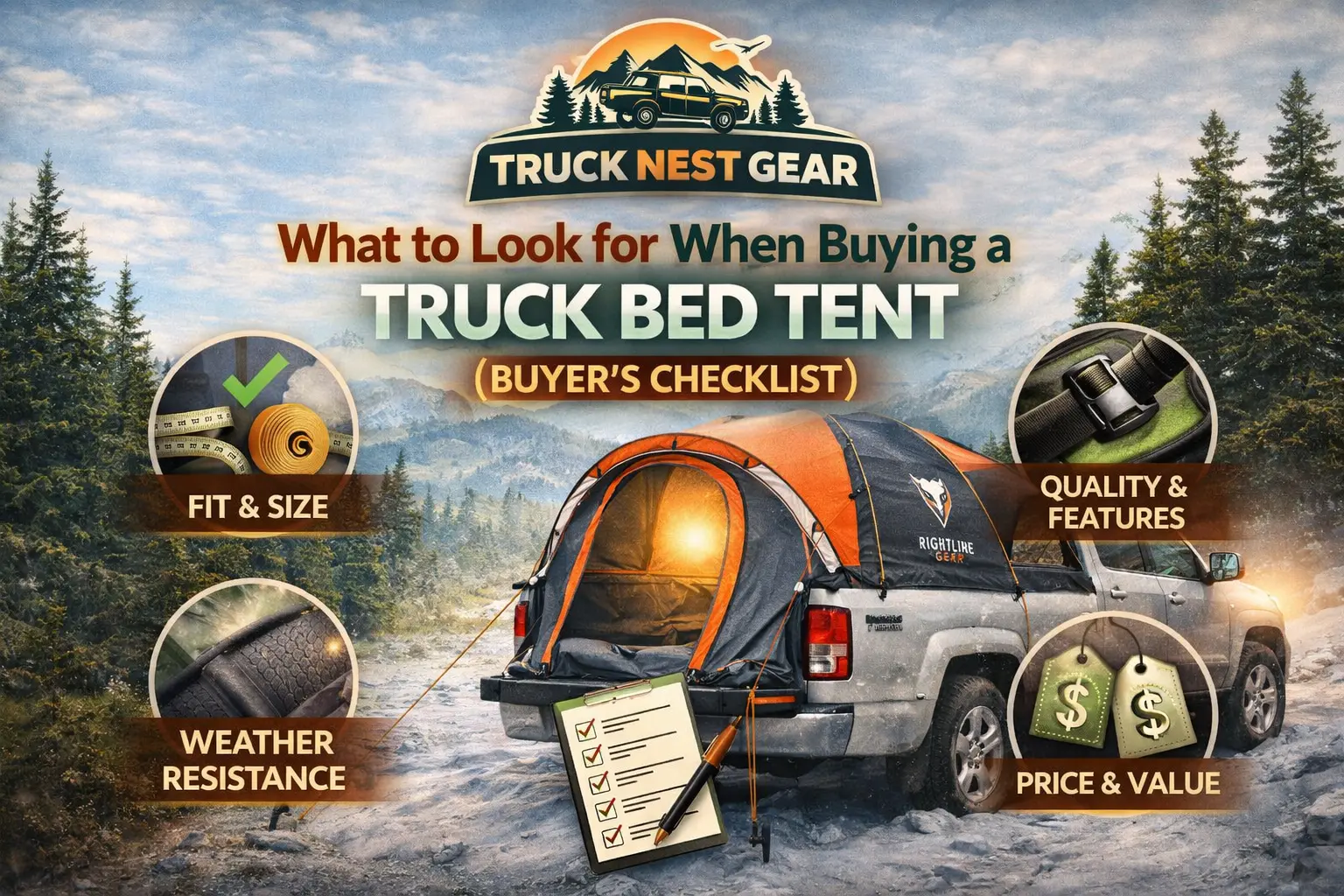
The Complete Truck Bed Tent Buyer’s Checklist
1. Bed Size Compatibility: The Most Critical Factor
This is the single most important item on this entire checklist. A truck bed tent that does not match your bed size will not anchor properly, will not seal against wind and rain, and will shift during the night.
Truck beds come in three standard size categories:
| Bed Size | Length Range | Common Trucks |
|---|---|---|
| Short Bed | 5 ft – 5.75 ft | Ford F-150 SuperCrew, RAM 1500 Crew Cab, Chevy Silverado Crew Cab, Toyota Tacoma Double Cab |
| Standard/Mid Bed | 6 ft – 6.5 ft | Ford F-150 SuperCab, RAM 1500 Quad Cab, Chevy Silverado Double Cab, GMC Sierra |
| Long Bed | 7 ft – 8 ft | Ford F-250, RAM 2500, Toyota Tundra long bed, Chevy Silverado work trucks |
How to measure correctly: Measure the interior length of your truck bed, from the inside face of the tailgate to the inside wall of the cab. Do not measure the exterior. A difference of just a few inches determines whether a tent fits or fails.
Never assume your truck’s advertised bed size matches the interior measurement exactly. The Toyota Tacoma Double Cab, for example, is marketed as a “5-foot bed” but measures approximately 59.5 inches inside the rails, slightly under 60 inches. Some tents listed as “5 ft compatible” are sized for a full 60-inch bed and sit loosely on the Tacoma’s actual interior. Always measure before purchasing, and verify against the manufacturer’s fitment database for your specific year, make, model, and cab configuration. Napier maintains a publicly available truck fitment lookup tool on their website that covers virtually every truck sold in North America. Using it before ordering takes two minutes and eliminates the most expensive mistake in this category.
2. Tent Material and Fabric Quality
The fabric your truck tent is made from determines how long it lasts, how well it handles weather, and how comfortable it feels inside. There are three primary materials you will encounter in the truck tent market.
Polyester is the dominant material in mid-range truck tents. It is lightweight, resistant to UV degradation, and holds water-resistant coatings well. A denier rating of 150D or above indicates a fabric thick enough for regular camping use; lower denier polyester at 75D or below degrades noticeably faster at pole sleeve contact points and corner stress areas. Polyester is a solid all-around choice for three-season campground and light trail use.
Ripstop nylon introduces a reinforcing grid pattern woven into the base fabric that prevents small tears from propagating. A snag that would create a spreading tear in standard polyester simply stops at the next ripstop thread intersection. Quality ripstop nylon truck tents are typically found in the $250 to $400 range and deliver four to six seasons of regular use with proper maintenance. Look for 150D to 300D ripstop nylon; lighter backpacking-grade ripstop below 100D is not engineered for the repeated stress of truck tent setup and breakdown cycles.
Canvas and poly-cotton blend is the material that changes the lifespan conversation. Canvas breathes continuously in a way that polyester cannot replicate, preventing the overnight condensation that makes synthetic tents uncomfortable in cooler temperatures. In rain, canvas fibers swell to create a near-watertight barrier without a separate rainfly in most conditions. Canvas truck tents represent a higher initial investment, typically $400 to $600, but their realistic lifespan of 8 to 15 seasons with proper care makes them the most cost-effective choice over a long camping horizon. The trade-off is weight, maintenance requirements, and the need to dry the tent completely before storage.
3. Waterproofing Rating: Do Not Overlook This
Waterproofing is measured using a hydrostatic head (HH) rating, a number expressed in millimeters that tells you how much water pressure the fabric can resist before it begins to leak.
| HH Rating | Protection Level | Suitable For |
|---|---|---|
| Under 1,000mm | Minimal | Light drizzle only |
| 1,000mm – 1,500mm | Basic | Moderate rain |
| 1,500mm – 2,000mm | Good | Heavy rain |
| 2,000mm – 3,000mm | Very Good | Storms and sustained rain |
| 3,000mm+ | Excellent | Harsh weather camping |
For truck bed tents, aim for a minimum of 1,500mm HH on the tent body and 2,000mm HH on the rainfly. Anything below these thresholds is a meaningful risk in real camping conditions, not just forecast rain but the sustained overnight rain that develops unexpectedly on a clear-sky evening.
Beyond the fabric rating, check whether the tent’s seams are taped or sealed. Unsealed seams are one of the most common water entry points, even on tents with high HH ratings. A tent with 2,000mm fabric and unsealed seams will leak at those seam lines before the fabric itself begins to allow water through. Fully taped seams are a strong indicator of quality construction and are standard on mid-range and premium models.
DWR coating Durable Water Repellent is the factory-applied treatment that causes water to bead on the tent surface rather than soaking in. This coating degrades with UV exposure, compression in the carry bag, and regular use. Reapplying a spray-on DWR treatment at the start of each camping season maintains the water-beading performance your tent had when new.
4. Pole System and Frame Strength
The pole system is what stands between you and a collapsed tent in the middle of the night. It is one of the most underdiscussed factors in truck tent buying, and it is where budget tents cut the most corners.
Fiberglass poles are found in most entry-level and mid-range truck tents. Fiberglass is affordable and flexible in mild conditions, but it becomes brittle in cold temperatures and can shatter rather than bend under sudden wind load, a failure mode that aluminum poles do not exhibit. For fair-weather summer camping, fiberglass poles are acceptable. For three- or four-season use, or for any camping that includes genuinely cold temperatures, fiberglass poles are a structural liability.
Aluminum poles are the standard in quality camping gear. Aluminum does not become brittle in cold; it bends rather than shatters, and a bent aluminum pole is a field-repairable problem rather than a tent-ending failure. Quality aluminum tent poles use 7000-series aluminum, the same alloy standard used in backpacking and expedition shelters.
What to check: Look at the pole diameter; poles in the 8.5mm to 9mm range offer meaningfully more wind resistance than thinner designs found in budget tents. Also confirm whether replacement poles are available directly from the manufacturer. Pole damage is the most common repair need for any tent over time, and the difference between a brand that stocks replacement parts and one that does not is the difference between a $15 repair and a full tent replacement.
5. Ventilation System
Ventilation is one of the most overlooked factors among first-time truck tent buyers and one of the biggest contributors to a miserable night’s sleep.
A truck bed is a partially enclosed metal space. Heat and moisture build up inside a truck bed tent significantly faster than in a freestanding ground tent. Without adequate ventilation, you will wake up in a tent dripping with condensation, even on a cool night, because the warm, humid air from your body has nowhere to escape and condenses against the cooler tent walls and metal bed surface.
A well-ventilated truck tent should include at least two mesh windows positioned on opposite walls to allow cross-ventilation, a roof vent or peak vent to release rising warm air, and a rainfly design that allows partial opening for airflow without compromising rain protection.
In warm-weather camping, prioritize ventilation as highly as you prioritize waterproofing; both are equally important to overall comfort and sleep quality. In winter camping, the ventilation requirement counterintuitively increases rather than decreases, because a completely sealed tent in cold conditions creates condensation that wets your sleeping bag and degrades its warmth throughout the night.
6. Attachment and Anchoring System
How a truck tent connects to your vehicle determines how secure and stable it feels during the night, and whether it will shift or detach in high wind.
Strap and buckle systems are the most common attachment method. Webbing straps loop under or around your bed rails and tighten with buckle or ratchet mechanisms. They are simple, adjustable, and work on virtually all truck bed types and rail profiles. Ratchet-style tensioning maintains strap tension more reliably through temperature cycles and sustained wind load than simple friction buckles.
Clamp systems are used on some premium truck tents, gripping the bed rails directly for a more solid, rattle-free connection. Clamps offer excellent stability but may not be compatible with all bed rail profiles; verify fitment for your specific truck before purchasing.
What to look for: Straps or clamps should be adjustable to accommodate different bed widths and rail heights and made from UV-resistant webbing. Cheap straps degrade quickly under sun exposure and can fail without visible warning. Wide webbing of 1.5 inches or above distributes attachment force across a larger contact area than narrow straps, reducing the likelihood of slipping under sustained load.
Confirm that the tent requires zero permanent modification to your truck. The best truck tents attach and detach cleanly without drilling, bolting, or leaving any marks on your vehicle.
7. Entry and Exit Design
How you get in and out of your truck tent matters more than most buyers anticipate, especially at 2 AM in the dark, in rain, on a sloped campsite.
Tailgate sleeve entry is the most common design. You climb in through the fabric sleeve at the rear of the truck, which drapes over the lowered tailgate. This works well for most campers but requires you to lower your tailgate each time you enter or exit, which can feel awkward in tight campsites or when the ground behind your truck is uneven.
Side door entry is included on some truck tents as an additional access point. A zippered side door allows you to enter and exit without touching the tailgate, which is significantly more convenient when parked on a slope, in a crowded campsite, or when you simply need to get up once in the night without the full entry sequence.
For frequent campers, a tent that includes both a side door and a tailgate sleeve offers the most practical flexibility.
8. Packed Size and Weight
A truck tent always travels in your truck bed rather than on your back, which means packed size and weight are less critical than in backpacking gear, but they still matter in practical ways.
A heavy, bulky truck tent takes up significant bed space when not in use and becomes genuinely inconvenient to store in a garage between trips. Look for a tent that packs into a manageable carry bag and weighs under 15 to 20 pounds for comfortable solo handling.
If you plan to carry your tent alongside overlanding gear, recovery equipment, coolers, water storage, and fuel cans, the packed dimensions of your tent directly affect how much additional gear fits alongside it. A premium canvas tent at 28 pounds is a meaningful commitment of both bed space and cargo weight that a 14-pound polyester tent does not impose.
9. Cabin Height and Interior Space
Headroom transforms the interior experience of a truck tent from merely functional to genuinely comfortable. A tent with a peak height of 48 inches or more allows most adults to sit upright, change clothes without contorting, and access gear stored at the sides of the tent.
Budget truck tents often sacrifice interior height to reduce material costs, an acceptable trade-off for occasional fair-weather use, but a real frustration on longer trips or in cold weather when you are spending more time inside the tent.
Check the interior floor dimensions carefully. Some manufacturers list the full tent footprint, including areas that taper at the sides, giving an inflated impression of usable sleeping space. Look for the actual flat sleeping area measurement between the wheel well humps, which is the limiting dimension for air mattress and sleeping bag sizing in any truck bed tent.
10. Brand Reputation and Warranty
Your final checklist item is one that no amount of spec comparison can replace: the reputation of the brand behind the tent.
Look for brands that have been in the truck camping space for at least several years, offer a minimum one-year warranty with genuinely responsive customer service, provide replacement parts for poles, rainflies, and attachment straps, and have a substantial number of verified reviews across multiple retail platforms rather than review counts concentrated on a single channel.
A truck tent is not a one-trip purchase. It is a piece of camping gear you expect to use for multiple seasons. Buying from a brand that stands behind its product with real after-sales support is worth a modest premium over a no-name import with no warranty backing and no replacement parts availability. The specific brands that consistently meet these standards, along with the individual models that best balance each factor on this checklist, are evaluated across every major truck platform and bed size in the complete guide to the best truck bed tents, which applies every criterion above to the specific models currently worth buying.
Quick-Reference Buyer’s Checklist
Before finalizing your purchase, confirm every item:
- Measured my exact truck bed interior length from tailgate inside face to cab inside wall
- Confirmed tent is specifically listed as compatible with my truck year, make, model, and cab style
- Checked fabric material, minimum 150D polyester, or ripstop nylon for better tear resistance
- Verified waterproofing HH rating, minimum 1,500mm tent body, 2,000mm rainfly
- Confirmed seams are taped or factory sealed, not coated only
- Checked pole material, aluminum preferred over fiberglass for three or four-season use
- Confirmed pole diameter of 8.5mm or above for adequate wind resistance
- Counted ventilation windows, minimum two mesh windows on opposite walls plus roof vent
- Reviewed attachment system for compatibility with my specific bed rail profile
- Confirmed zero permanent truck modification required
- Checked entry design, side door availability for convenient overnight access
- Reviewed packed weight and dimensions against my available storage space
- Confirmed interior peak height meets my sitting upright requirement
- Verified brand warranty coverage and replacement parts availability
- Read verified owner reviews specific to my truck model
Final Thoughts
Buying a truck bed tent is not complicated, but buying the right one requires paying attention to the details that most product listings gloss over. Bed compatibility, waterproofing ratings, pole quality, and ventilation design are the four factors that separate a tent you will use for years from one that disappoints on its very first trip.
The quick-reference checklist above gives you everything you need to evaluate any tent you are considering. Measure your bed, verify the HH rating and seam construction, confirm the pole material, count the ventilation points, and check the brand’s warranty and parts support before committing.
What the checklist cannot show you is how the top-rated current models actually perform against these criteria in the real-world conditions that truck campers face, the specific HH ratings, pole specs, and bed size compatibility data for every model worth considering across short beds, standard beds, and long beds is compiled and evaluated in the complete guide to the best truck tents for camping, which covers every major truck platform from Tacoma short beds to HD long-box configurations.