Truck Camping Tips: Complete Beginner to Advanced Overview
Truck camping is a travel method where people sleep and live in pickup trucks using 4 setup types: truck bed tents, camper shells, rooftop tents, and sleeping platforms. It uses vehicles like Ford F-150, Toyota Tacoma, and Chevrolet Silverado as mobile shelters. It suits 3 user groups: beginners, travelers, and overlanders. These users camp in locations like forests, highways, and deserts. Truck camping provides 4 benefits: cost savings, mobility, safety, and weather protection. According to the Outdoor Industry Association, 54% of Americans participated in outdoor recreation in 2022, including camping and road travel.
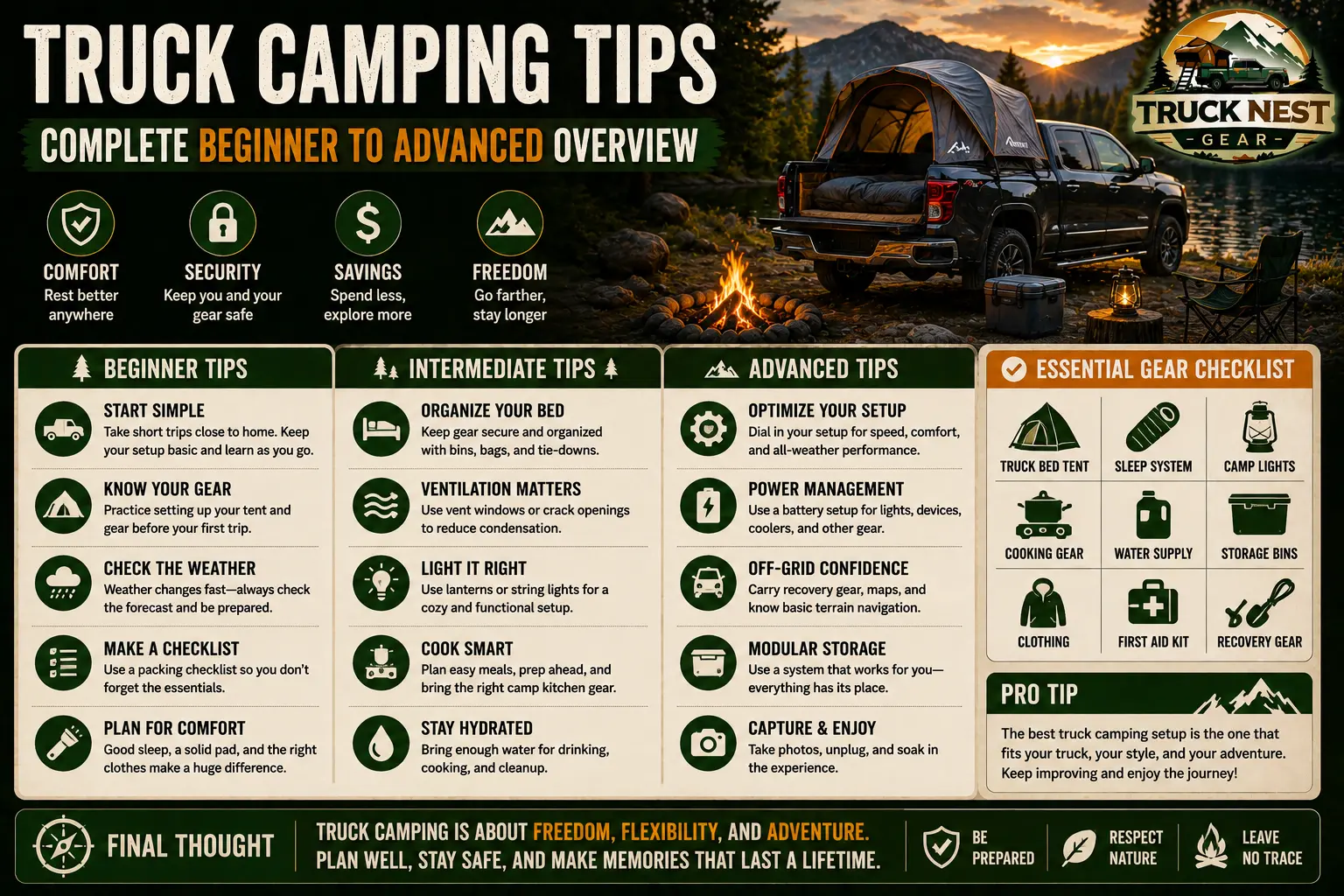
Starting truck camping requires 5 steps: choose a setup, prepare gear, organize storage, select locations, and ensure safety. Setup options include open beds, camper shells, truck bed tents, and rooftop tents. Costs range from $100 to $4,000. Comfort depends on 4 factors: bedding, insulation, ventilation, and leveling. Essential systems include power, water, and cooking. Examples include solar panels, jerry cans, and camp stoves.
Truck camping operations depend on 5 systems: gear management, food planning, power usage, legal parking, and safety practices. Food includes non-refrigerated items like canned foods, rice, and jerky. Water needs range from 2.7 to 3.7 liters daily based on Centers for Disease Control and Prevention data. Power systems include batteries, solar panels, and alternators. Daily usage ranges from 300Wh to 1000Wh. Legal camping includes campgrounds, public lands, and urban parking zones.
Truck camping performance depends on solving 4 problems: condensation, space limits, weather exposure, and power loss. Solutions include ventilation systems, modular storage, insulation layers, and energy tracking. Costs range across 3 levels: $100–$800 for budget, $800–$5,000 for mid-range, and $5,000–$30,000 for advanced builds. Truck camping balances mobility, cost, and setup speed compared to vans and tents.
Long-term efficiency improves through 3 strategies: maintenance, optimization, and upgrades. Payload ranges from 500 kg to 1,500 kg. Tire pressure ranges from 30 PSI to 40 PSI. Oil changes occur every 5,000 to 10,000 km. Structured checklists improve consistency. Gradual upgrades like solar systems, insulation, and suspension improve comfort and durability.
What Is Truck Camping and Why Do People Choose It?
Truck camping is a travel method where people sleep and live inside or on pickup trucks using setups like truck bed tents, camper shells, and slide-in campers. It uses vehicles like Ford F-150, Toyota Tacoma, and Chevrolet Silverado as mobile shelters. There are 4 setup types, including truck bed tents, rooftop tents, slide-in campers, and sleeping platforms. Truck camping suits 3 user groups: beginners, travelers, and overlanders. Beginners camp in locations like parks, forests, and lakes. Travelers explore routes like highways, coastal roads, and national parks. Overlanders access areas like deserts, mountains, and off-road trails.
People choose truck camping due to 4 benefits: cost reduction, mobility, safety, and weather protection. Truck camping reduces accommodation costs compared to hotels, motels, and lodges. It enables movement across locations like campgrounds, public lands, and remote trails. It improves safety with enclosed vehicles, including lockable doors, hard shells, and elevated beds. It protects from weather conditions like rain, wind, and low temperatures. According to the Outdoor Industry Association, 54% of Americans participated in outdoor recreation in 2022, including camping, hiking, and road travel.
How to Start Truck Camping (Beginner Basics)
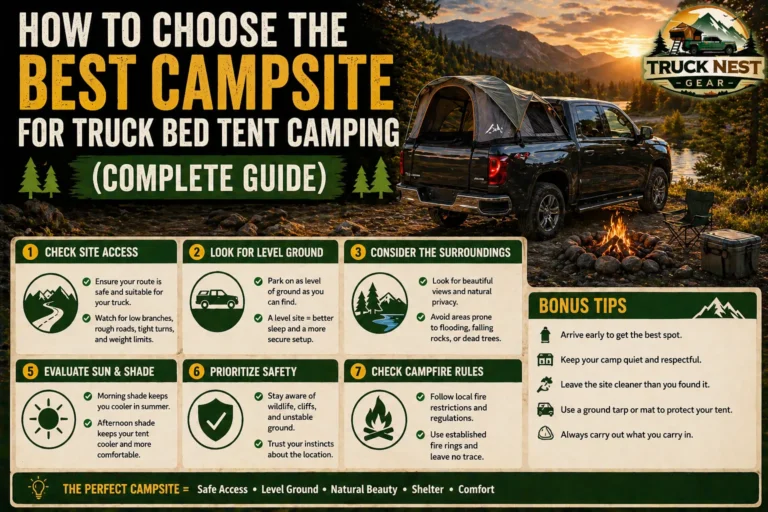
Start truck camping by completing 5 steps: select a setup, prepare gear, organize storage, choose locations, and ensure safety. First, select 1 setup type, including truck bed tents, rooftop tents, and camper shells. Second, prepare sleeping gear like foam mattresses, sleeping bags, and thermal blankets. Third, organize storage systems like plastic bins, drawer systems, and cargo nets. Fourth, choose camping locations like campgrounds, public lands, and forest areas. Fifth, ensure safety practices like parking on level ground, locking doors, and maintaining airflow.
Additional beginner essentials include 3 systems: power, water, and cooking. Power systems include portable batteries, solar panels, and inverters. Water storage includes jerry cans, water tanks, and bottles. Cooking setups include camp stoves, propane burners, and coolers. According to the Outdoor Industry Association, 54% of Americans participated in outdoor recreation in 2022, including camping, hiking, and road travel.
Truck Camping Setup Ideas (Best Options Explained)
Truck camping setup ideas include 4 main options: open truck beds, camper shells, truck bed tents, and rooftop tents. These setups support camping in pickup trucks like Ford F-150, Toyota Tacoma, and Chevrolet Silverado. Each setup differs in 3 factors: cost, protection, and comfort. Open truck beds provide minimal coverage. Camper shells create enclosed spaces. Truck bed tents add portable shelter. Rooftop tents provide elevated sleeping. According to the Outdoor Industry Association, 54% of Americans participated in outdoor recreation in 2022, including camping, hiking, and road travel.
Sleeping in an Open Truck Bed
Sleeping in an open truck bed uses a flat surface with basic gear like foam mattresses, sleeping bags, and blankets. This setup costs under $200, including air mattresses, tarps, and pads. It fits truck beds with 3 sizes, including 5 ft, 6 ft, and 8 ft lengths. Advantages include low cost, fast setup under 5 minutes, and flexible storage. Disadvantages include exposure to weather conditions like rain, wind, and cold temperatures. It also reduces safety compared to enclosed setups like camper shells and tents.
Camper Shell (Truck Cap) Setup
A camper shell setup uses a hard cover to create an enclosed sleeping and storage space. Camper shells cost between $800 and $3,000, using materials like aluminum, fiberglass, and composite panels. They improve security with lockable doors and sealed windows. They support storage systems like drawer units, cargo boxes, and platforms. Advantages include weather protection, durability, and privacy. Disadvantages include reduced airflow, added weight up to 200 kg, and limited headroom.
Truck Bed Tents
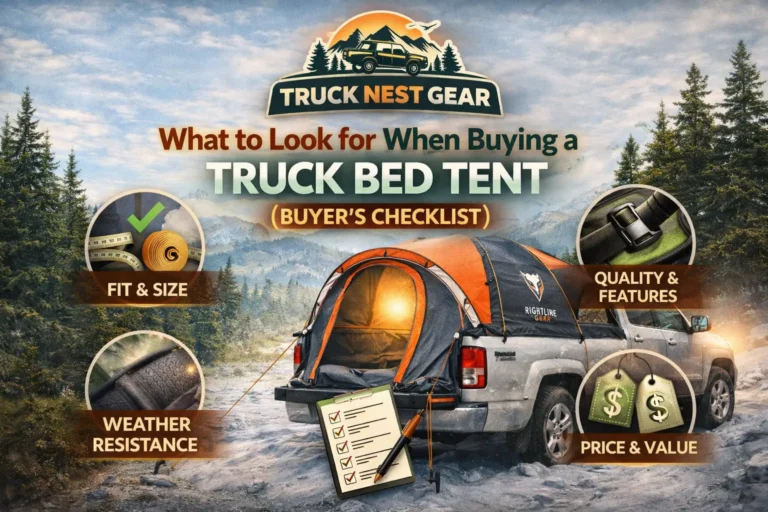
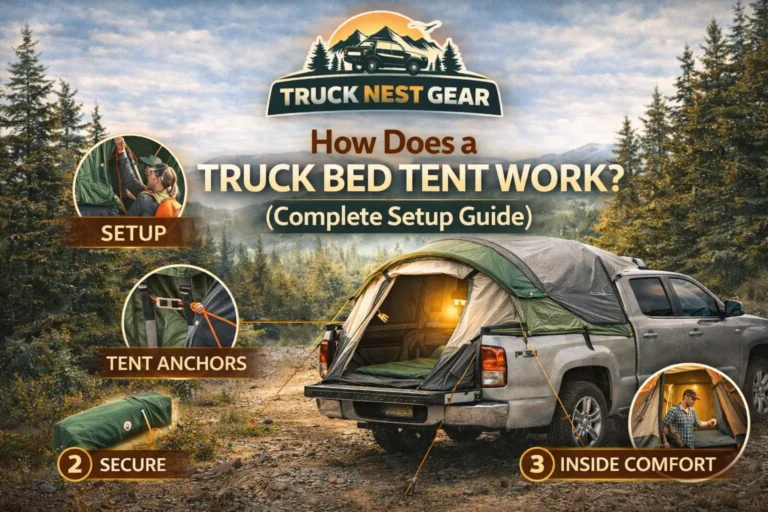
Truck bed tents are fabric shelters installed in truck beds using poles, straps, and rainfly covers. These tents cost between $100 and $400, from brands like Napier, Rightline Gear, and Kodiak. They protect from conditions like rain, wind, and insects. Setup takes 10 to 20 minutes. Advantages include low cost, lightweight design, and easy removal. Disadvantages include lower durability in strong winds, dependence on flat ground, and limited insulation in cold climates.
Rooftop Tents
Rooftop tents are elevated sleeping systems mounted on vehicle roofs using racks and foldable frames. These tents cost between $1,000 and $4,000, including soft-shell tents, hard-shell tents, and hybrid models. They require roof load capacity between 50 kg and 100 kg. They provide elevation from hazards like mud, insects, and small animals. Setup takes 5 to 10 minutes. Advantages include improved safety, airflow, and stability. Disadvantages include high cost, increased fuel consumption, and vehicle height restrictions in garages and tunnels.
How to Sleep Comfortably in a Truck Bed
Sleep comfortably in a truck bed by optimizing 4 factors: bedding, temperature control, ventilation, and surface stability. Use bedding types like foam mattresses, air mattresses, and sleeping pads. Foam mattresses provide 5–10 cm thickness. Air mattresses offer adjustable firmness. Sleeping pads provide insulation with R-values between 2 and 5. Level the surface using plywood boards, foam layers, and leveling blocks.
Maintain warmth using 3 insulation methods: sleeping bags, thermal layers, and liners. Use sleeping bags rated for -5°C to 5°C. Add layers like fleece blankets, wool liners, and insulated pads.
Stay cool using 3 cooling methods: airflow, shade, and reflective materials. Use mesh windows, battery fans, and roof vents for airflow. Park in shaded areas like forests, hills, and covered campsites. Use reflective covers like sunshades, tarps, and insulated panels.
Improve ventilation using 3 airflow techniques: cross-ventilation, window gaps, and moisture control. Open opposite windows for airflow. Use vent covers, mesh screens, and rain guards. Reduce condensation using airflow and moisture absorbers. According to the National Sleep Foundation, a sleep temperature between 16°C and 19°C improves sleep quality, including outdoor environments like truck beds and tents.
Essential Truck Camping Gear and Smart Hacks
Essential truck camping gear and smart hacks include 3 components: core equipment, space-saving methods, and a packing checklist. Beginners require 8 gear categories, including sleeping gear like foam mattresses, sleeping bags, and pillows. Cooking gear includes camp stoves, propane burners, and coolers. Lighting tools include LED lanterns, headlamps, and flashlights. Power systems include portable batteries, solar panels, and inverters. Storage items include plastic bins, drawer systems, and cargo nets. Safety gear includes first aid kits, fire extinguishers, and emergency blankets. According to the Outdoor Industry Association, 54% of Americans participated in outdoor recreation in 2022, including camping, hiking, and road travel.
Smart truck camping hacks improve space efficiency using 5 methods: vertical storage, modular packing, multi-use gear, under-bed storage, and quick-access layouts. Vertical storage uses hooks, racks, and hanging organizers. Modular packing uses stackable bins, collapsible containers, and labeled boxes. Multi-use gear includes foldable tables, storage benches, and convertible beds. Under-bed storage uses sliding drawers, flat boxes, and hidden compartments. Quick-access layouts place items like water bottles, flashlights, and tools within reach.
A simple packing checklist includes 10 item groups: bedding, cooking tools, water storage, lighting, clothing, safety gear, hygiene items, navigation tools, repair kits, and food supplies. Water storage includes jerry cans, bottles, and tanks. Hygiene items include wipes, biodegradable soap, and towels. Food supplies include dry foods, canned meals, and snacks. Repair kits include tire inflators, jumper cables, and tool sets. Navigation tools include GPS devices, maps, and compasses.
Food, Water, and Cooking While Truck Camping
Manage food, water, and cooking in truck camping using 3 systems: cooking setups, non-refrigerated food options, and water storage methods. Use cooking setups like camp stoves, propane burners, and portable grills. These systems use fuels like butane canisters, propane tanks, and alcohol burners. Setup cooking areas using foldable tables, tailgates, and wind shields.
Choose 5 food types that do not require refrigeration, including canned foods, dry foods, ready meals, nuts, and energy bars. Examples include canned beans, rice, pasta, jerky, and trail mix. Store food in containers like sealed boxes, coolers, and insulated bags. Plan 2 to 3 meals per day using calorie-dense foods.
Store and manage water using 3 methods: storage, purification, and usage control. Use containers like jerry cans, water tanks, and bottles with 10 to 20 liters capacity. Purify water using filters, tablets, and UV purifiers. Allocate water for drinking, cooking, and cleaning. According to the Centers for Disease Control and Prevention, adult men require 3.7 liters of water daily, and women require 2.7 liters, including outdoor activities like camping.
Power and Electricity for Truck Camping
Power and electricity for truck camping rely on 3 systems: portable power stations, solar panels, and energy planning. Portable power stations store 200Wh to 2000Wh capacity. Examples include Jackery Explorer, EcoFlow Delta, and Goal Zero Yeti. These units provide outputs like AC outlets, DC ports, and USB ports. They power devices like phones, lights, and portable fridges. Battery types include lithium-ion batteries, AGM batteries, and lead-acid batteries.
Solar panels generate 50W to 200W power using sunlight. Examples include foldable panels, rigid panels, and roof-mounted panels. Solar panels recharge batteries during daylight hours. Charging methods also include vehicle alternators, DC-to-DC chargers, and wall outlets. Solar efficiency depends on sunlight hours, panel angle, and weather conditions.
Calculate power needs using 3 device groups: lighting, electronics, and appliances. Lighting includes LED lanterns, headlamps, and strip lights. Electronics include smartphones, GPS units, and laptops. Appliances include fridges, fans, and heaters. Daily usage ranges from 300Wh to 1000Wh. A 500Wh battery powers a 50W fridge for 10 hours. According to the U.S. Energy Information Administration, a smartphone uses about 10Wh per charge, including outdoor scenarios.
Where You Can Park and Camp Legally
You can park and camp legally in 3 place types: campgrounds, public lands, and approved urban locations. Campgrounds include national parks, state parks, and private RV parks. Examples include Yellowstone campgrounds, California state parks, and KOA sites. These locations require reservations or permits. Public lands allow dispersed camping in areas like Bureau of Land Management lands, national forests, and desert regions. These areas permit stays up to 14 days within 28 days.
Urban and stealth camping follow 3 rules: legal parking, low visibility, and time limits. Approved urban locations include retail lots, rest areas, and truck stops. Examples include Walmart parking lots, highway rest stops, and travel centers. Parking limits range from 8 to 12 hours in cities. Always check signs like “No Overnight Parking” and local regulations. According to the Bureau of Land Management, over 245 million acres of public land are available for recreation, including camping, hiking, and vehicle travel.
Truck Camping Safety Tips
Truck camping safety requires 3 practices: personal safety, wildlife awareness, and vehicle security. Personal safety includes 4 actions: choose safe locations, maintain communication, carry emergency gear, and monitor surroundings. Safe locations include campgrounds, rest areas, and designated parking zones. Communication tools include mobile phones, satellite communicators, and radios. Emergency gear includes first aid kits, flashlights, and multi-tools. According to the National Park Service, over 300 wildlife incidents are reported annually in US parks, including encounters with bears, bison, and elk.
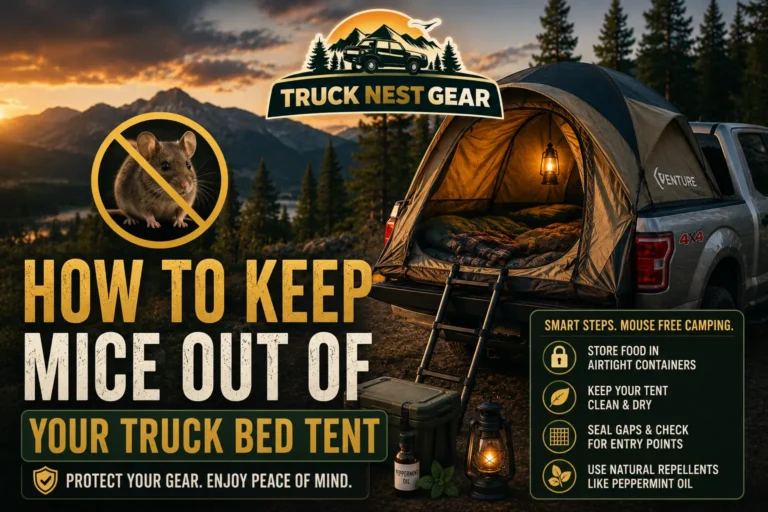
Wildlife awareness and vehicle security rely on 4 methods: food storage, distance control, locking systems, and visibility management. Store food in containers like bear canisters, sealed bins, and odor-proof bags. Maintain a distance of at least 30 meters from wildlife like bears, raccoons, and coyotes. Secure vehicles using door locks, window locks, and alarm systems. Use tools like steering locks, motion sensors, and alarms. Park in visible areas like campgrounds, public lots, and rest stops.
Common Truck Camping Problems (And How to Fix Them)
Common truck camping problems include 4 issues: condensation, limited space, weather exposure, and power loss, each with practical solutions. Condensation forms when warm air meets cold surfaces inside the truck. Moisture sources include breathing, cooking, and wet gear. Fix it using ventilation methods like window gaps, roof vents, and fans. Use moisture control tools like silica gel packs, dehumidifiers, and absorbent mats.
Limited space affects storage and movement inside the truck bed. Items include bedding, cooking gear, and tools like stoves, bins, and repair kits. Solve it using storage systems like drawer units, stackable boxes, and hanging organizers. Use layout zones for frequently used items and rarely used gear.
Weather challenges include 3 conditions: rain, heat, and cold. Rain requires waterproof covers like tarps, rainfly sheets, and sealed tents. Heat requires cooling methods like fans, shade parking, and reflective covers. Cold requires insulation like thermal blankets, sleeping bags, and foam pads.
Power loss occurs when energy consumption exceeds battery capacity. Devices include lights, phones, and fridges like LED lanterns, smartphones, and portable coolers. Prevent power loss using charging systems like solar panels, alternators, and power stations. Track usage between 300Wh and 1000Wh daily. According to the U.S. Department of Energy, energy efficiency improvements reduce power use by up to 30%, including portable systems.
How Much Does Truck Camping Cost?
Truck camping costs fall into 3 levels: budget setups from $100 to $800, mid-range setups from $800 to $5,000, and premium builds from $5,000 to $30,000. Budget setups use basic gear like foam mattresses, sleeping bags, and tarps. Examples include air mattresses, blankets, and plastic bins. Mid-range setups use equipment like camper shells, power stations, and storage systems. Examples include Jackery batteries, drawer units, and rooftop racks. Premium builds use advanced systems like slide-in campers, solar panels, and overland rigs. Examples include hard-shell campers, lithium batteries, and integrated kitchens.
Truck camping also includes 3 ongoing cost types: fuel, maintenance, and campsite fees. Fuel costs depend on distance and vehicle efficiency. Maintenance includes oil changes, tire replacements, and repairs. Campsite fees range from $0 on public lands to $20–$50 per night at campgrounds. Truck camping reduces accommodation costs compared to hotels, motels, and lodges. According to the American Hotel and Lodging Association, average hotel rates exceeded $150 per night in 2023, including economy and mid-range stays.
Truck Camping vs Other Camping Styles
Truck camping differs from 3 camping styles: van life, tent camping, and truck-mounted setups based on cost, space, and mobility. Truck camping uses vehicles like Ford F-150, Toyota Tacoma, and Chevrolet Silverado. It combines transport and sleeping space in one unit. Van life uses vans like Mercedes Sprinter, Ford Transit, and Ram ProMaster. Tent camping uses shelters like dome tents, backpacking tents, and cabin tents. According to the Outdoor Industry Association, over 92 million Americans camped in 2022, including tent, RV, and vehicle camping.
Truck camping and van life differ in 3 aspects: cost, space, and built-in systems. Truck setups cost $100 to $5,000. Vans cost $10,000 to $80,000. Vans include systems like beds, kitchens, and storage units. Trucks use modular gear like bins, tents, and platforms. Vans provide standing space up to 6 feet. Trucks provide higher off-road mobility and easier parking.
Truck camping and tent camping differ in 3 aspects: protection, setup time, and relocation speed. Truck camping provides enclosed protection from weather conditions like rain, wind, and cold. Tent camping requires 20 to 40 minutes setup using poles, stakes, and fabric. Truck camping allows relocation within minutes between locations like forests, deserts, and public lands.
Camper shells and rooftop tents differ in 3 aspects: cost, height, and security. Camper shells cost $800 to $3,000. Rooftop tents cost $1,000 to $4,000. Camper shells provide enclosed security using lockable covers and solid panels. Rooftop tents provide elevation above hazards like mud, insects, and small animals.
Advanced Truck Camping Tips
Advanced truck camping requires managing 3 factors: payload limits, fuel efficiency, and vehicle maintenance for safe and efficient travel. Payload capacity ranges from 500 kg to 1,500 kg in trucks like Ford F-150, Toyota Tacoma, and Chevrolet Silverado. Calculate payload using GVWR minus curb weight. Distribute weight across zones like front axle, rear axle, and truck bed. Use suspension upgrades like leaf springs, airbags, and shock absorbers for load stability.
Fuel efficiency decreases by 10% to 25% due to added weight and aerodynamic drag from gear like rooftop tents, camper shells, and racks. Efficiency drops further at speeds above 90 km/h. Reduce drag using low-profile setups like soft-shell tents, compact racks, and streamlined covers. Maintain tire pressure between 30 PSI and 40 PSI based on load and terrain.
Vehicle wear increases under load and requires 3 maintenance actions: tire checks, fluid checks, and brake inspections. Tires include all-terrain tires, highway tires, and mud-terrain tires. Fluids include engine oil, coolant, and transmission fluid. Perform oil changes every 5,000 to 10,000 km. According to the U.S. Department of Energy, proper maintenance improves fuel efficiency by up to 4%, including loaded driving conditions.
Quick Checklists for Truck Camping
Quick checklists for truck camping include 4 lists: packing, pre-trip, setup, and safety for organized and efficient travel. A packing checklist includes 8 item groups like bedding, cooking gear, water storage, and lighting. Examples include sleeping bags, camp stoves, jerry cans, and LED lanterns. Separate essential gear from optional items like chairs, hammocks, and extra storage bins.
A pre-trip checklist includes 6 vehicle and route checks: fuel, tires, fluids, battery, weather, and navigation. Examples include fuel tanks, tire pressure gauges, engine oil, and GPS maps. Maintain tire pressure between 30 PSI and 40 PSI. Check weather conditions like rain, heat, and wind before departure.
A setup checklist includes 4 steps: leveling, shelter setup, gear placement, and airflow control. Level the truck using ramps, blocks, and flat ground. Position the truck based on wind direction and terrain. Arrange gear like bins, tools, and food supplies.
A safety checklist includes 6 actions: secure locks, emergency access, communication, fire safety, lighting, and hazard awareness. Emergency gear includes first aid kits, flashlights, fire extinguishers, and whistles. According to the Centers for Disease Control and Prevention, preparedness planning reduces emergency risks, including outdoor activities like camping and travel.
Final Tips to Improve Your Truck Camping Experience
Improve your truck camping experience using 3 strategies: daily habits, mistake prevention, and gradual upgrades. Daily habits include organizing gear, maintaining airflow, and checking weather conditions. Examples include using storage bins, opening vents, and monitoring forecasts. Add routines like cleaning surfaces, charging devices, and refilling water daily. These habits improve comfort and efficiency during trips.
Avoid 4 common mistakes: overpacking, uneven weight distribution, poor maintenance, and unsafe parking. Examples include overloaded beds, unbalanced cargo, skipped oil checks, and dark locations. These mistakes increase fuel use, reduce safety, and lower comfort.
Upgrade your setup in 3 stages: basic, intermediate, and advanced systems. Basic upgrades cost $50 to $300 and include bedding, lighting, and storage. Intermediate upgrades cost $300 to $2,000 and include power stations, insulation, and cooking gear. Advanced upgrades cost $2,000 to $10,000 and include solar panels, suspension kits, and rooftop tents. According to the Outdoor Industry Association, gear optimization improves outdoor efficiency, including camping and travel activities.