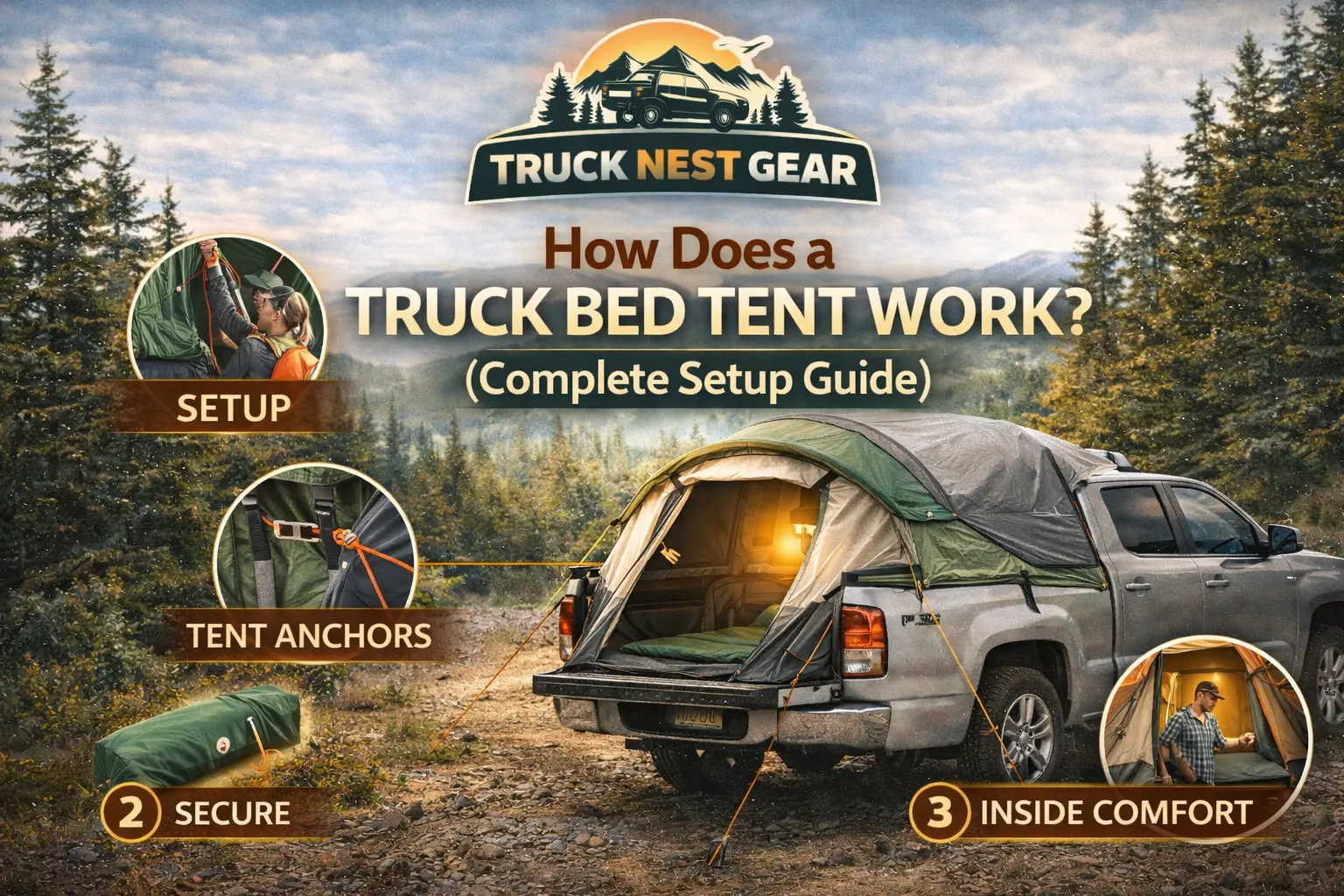
How Does a Truck Bed Tent Work? (Complete Setup Guide)
Imagine pulling up to your favorite campsite, dropping your tailgate, and sleeping elevated off the ground, no rocks, no roots, no soggy ground beneath you. That is exactly what a truck bed tent makes possible.
But if you have never used one before, a very natural question comes to mind: how does a truck bed tent actually work?
This guide breaks down everything, from the basic mechanics to the full setup process — so you know exactly what to expect before you buy or before you head out on your first truck camping trip.
What Is a Truck Bed Tent?
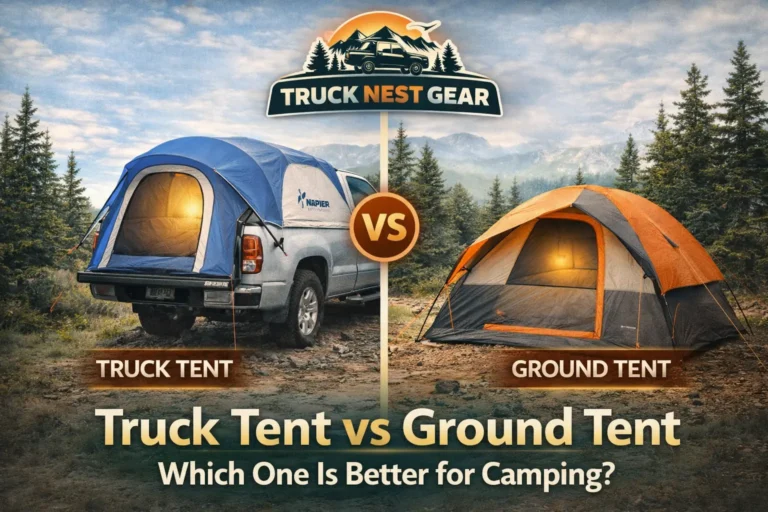
A truck bed tent is a purpose-built camping shelter that mounts directly onto the bed of a pickup truck. Unlike a traditional ground tent, it uses your truck bed as its floor, transforming your vehicle into a raised, secure sleeping platform.
Most truck bed tents are engineered to fit standard bed sizes, typically 5-foot, 6-foot, and 8-foot beds, and they attach using a combination of bed rail clamps, pole systems, and tailgate sleeves.
The result is a weatherproof, elevated sleeping space that you can set up in minutes without any special tools.
The Core Components of a Truck Bed Tent
Before understanding how a truck bed tent works, it helps to know what it is made of. Every quality truck bed tent consists of the following components:
1. The Tent Body: The main fabric shell that forms the walls and roof of your sleeping space. Most tent bodies are made from polyester or ripstop nylon, both of which offer a reliable balance of durability and weather resistance.
2. The Pole System: Fiberglass or aluminum poles create the structural frame that holds the tent upright. Aluminum poles are significantly stronger and more wind-resistant, which is why they are preferred in higher-end models.
3. The Rainfly: A secondary waterproof cover that drapes over the tent body. The rainfly is your primary defense against rain, dew, and condensation. Not all truck tents include a full rainfly, so this is an important feature to check before purchasing.
4. The Tailgate Sleeve: This is the sleeve or tunnel-shaped extension that drops over your tailgate when it is open. It seals the gap between your tent and the truck, keeping wind, insects, and rain from entering through the back.
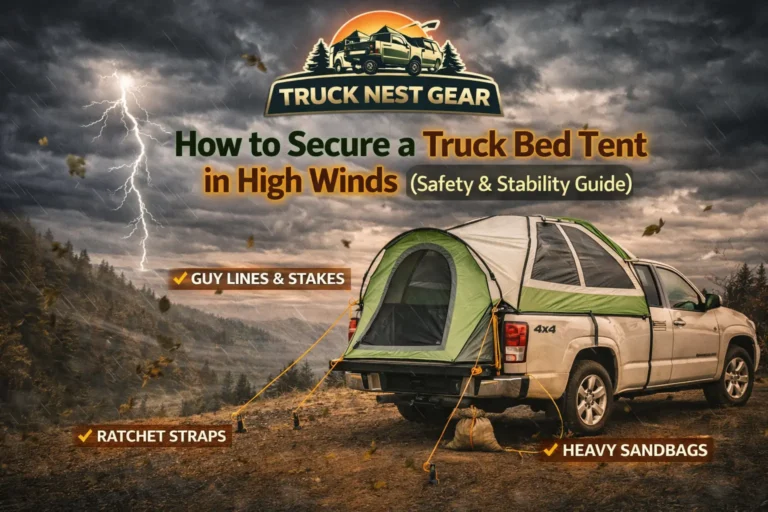
5. Bed Rail Attachments: Straps, buckles, or clamps that grip your truck’s bed rails to anchor the tent firmly in place. These are critical for stability, especially in windy conditions.
6. Mesh Windows and Ventilation Panels Most truck tents include zippered mesh windows that provide airflow and visibility without letting insects inside.
How Does a Truck Bed Tent Actually Work?
At its core, a truck bed tent works by using your truck bed as a raised, solid foundation, replacing the need for stakes, a ground footprint, or a flat surface.
Here is a step-by-step breakdown of the mechanics:
Step 1: The Truck Bed Becomes the Floor
Your truck bed liner or bare metal bed surface acts as the tent floor. Many campers add a sleeping pad, foam mat, or inflatable mattress on top for comfort. Because you are already elevated, you avoid ground moisture, insects, and uneven terrain entirely.
Step 2: The Frame Creates the Structure
The pole system is threaded through the tent’s fabric sleeves and bent into a curved or A-frame shape above the truck bed. Once the poles are connected and tensioned, the tent stands upright with a rigid, stable structure.
Step 3: The Tent Anchors to the Truck
Straps or clamps loop around your bed rails and tighten to lock the tent in position. This anchoring system prevents the tent from shifting during the night or lifting in the wind.
Step 4: The Tailgate Seals the Entry
With the tailgate lowered, the tailgate sleeve drops over it to create a sealed entrance tunnel. You climb in and out through this sleeve or through a side door, depending on the tent model.
Step 5: The Rainfly Covers Everything
Once you are inside, you zip up the rainfly over the tent body for full weather protection. On dry nights, many campers leave the rainfly off to enjoy stargazing through the mesh roof.
Truck Bed Tent Airflow and Ventilation
One of the most common concerns new truck campers have is condensation and heat buildup inside the tent. Since a truck bed tent sits in an enclosed metal space, this is a legitimate concern, but it is one that good tent design addresses effectively.
Quality truck tents solve this through:
- Multiple mesh windows: Positioned on opposite sides of the tent to encourage cross-ventilation
- Roof vents: That release warm air rising to the top
- Adjustable rainfly tension: That allows you to crack open the fly for airflow while still blocking rain
In moderate temperatures, proper ventilation makes a truck bed tent surprisingly comfortable. In extreme heat, a battery-powered camping fan placed near a mesh window dramatically improves airflow.
Does a Truck Bed Tent Work With the Truck Topper or Tonneau Cover?
This is a question that surprises many first-time buyers. The short answer is: it depends on the tent design.
Most standard truck bed tents require an open, uncovered bed, meaning your tonneau cover or truck topper needs to be removed before setup. The tent poles and fabric need open vertical space above the bed to stand upright.
However, some specialized truck tents are designed to work with specific configurations. Always check the manufacturer’s compatibility notes before purchasing if you use a topper or cover regularly.
Truck Bed Tent Size Compatibility
Not every truck bed tent fits every truck. Sizing is one of the most important and most frequently overlooked factors when choosing a truck bed tent.
Truck beds are generally available in three standard sizes:
| Bed Size | Approximate Length | Common Truck Examples |
| Short Bed | 5 ft – 5.5 ft | Ford F-150 (short), Ram 1500 (short) |
| Standard Bed | 6 ft – 6.5 ft | Toyota Tacoma, Chevy Colorado |
| Long Bed | 7 ft – 8 ft | Ford F-250, Ram 2500 |
A tent designed for a 6-foot bed will not seal or anchor properly on a 5-foot or 8-foot bed. Always measure your bed length, from the inside of the tailgate to the inside of the cab wall, before purchasing.
Common Mistakes to Avoid When Setting Up a Truck Bed Tent
Even a well-designed tent can fail if set up incorrectly. Here are the most common errors and how to avoid them:
Mistake 1 — Skipping the bed measurement: Always confirm your exact bed length before purchasing. An ill-fitting tent will not anchor securely and will let in wind and rain.
Mistake 2 — Forgetting to clean the bed rails: Dirt, rust, or debris on your bed rails can prevent the attachment straps from gripping properly. A quick wipe-down before setup ensures a firm, stable connection.
Mistake 3 — Setting up without reading the instructions first: Every tent model has a slightly different pole sequence and attachment order. Reading the manual once before your first setup saves a significant amount of frustration.
Mistake 4 — Leaving the rainfly off in uncertain weather: Even when skies look clear, mountain and forest weather changes rapidly. Always carry the rainfly and be prepared to attach it quickly.
Mistake 5 — Over-tightening the bed rail straps: Straps that are too tight can warp the tent frame and damage the fabric over time. Snug and firm is the goal, not white-knuckle tight.
How Long Does It Take to Set Up a Truck Bed Tent?
For a first-time setup, most truck campers take 20 to 35 minutes to get their tent fully assembled. After two or three practice runs, the same setup typically comes down to 10 to 15 minutes.
The fastest truck tents on the market, particularly hub-style pop-up designs, can be fully deployed in under 5 minutes once you are familiar with the process.
Is a Truck Bed Tent Right for You?
A truck bed tent works exceptionally well for:
- Solo campers and couples who want a quick, elevated sleeping solution
- Overlanders and off-road campers who camp on uneven or rocky terrain
- Weekend adventurers who want a faster setup than a traditional tent
- Truck owners who already have the vehicle and want to maximize its utility
It may not be the best choice for:
- Families of three or more who need significantly more interior space
- Campers who frequently change truck models (compatibility varies)
- Anyone who needs to use their truck bed for hauling during the same trip
Final Thoughts
A truck bed tent works by turning your pickup into a purpose-built camping shelter, elevated, weather-protected, and faster to deploy than most ground tent alternatives. Once you understand the pole system, the tailgate sleeve, and the anchoring mechanism, the setup process becomes second nature.
If you are ready to explore the best options on the market, check out our complete guide to the Best Truck Tents for Camping, where we review and rank the top models across every bed size and budget.