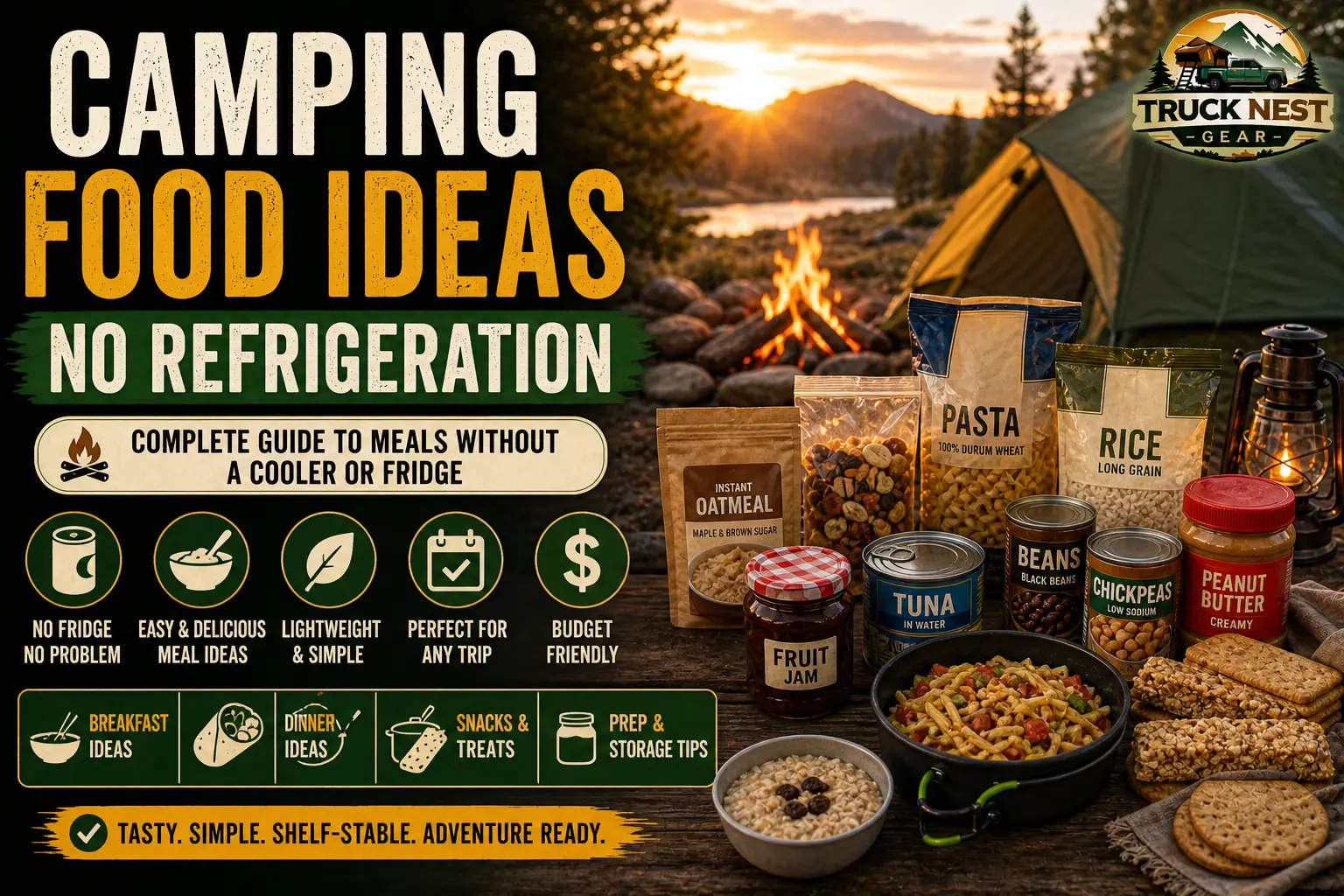
Camping Food Ideas No Refrigeration (Complete Guide to Meals Without a Cooler or Fridge)
Camping food without refrigeration includes shelf-stable and low-moisture foods that remain safe for 24–72 hours at 20°C–30°C.
This guide explains food selection, storage, safety, and meal planning using structured methods and real scenarios.
Food selection depends on 5 factors: shelf life, heat resistance, weight, nutrition, and packaging.
It covers 3 food types: non-perishable foods like rice, beans, and canned tuna, shelf-stable foods like MREs, UHT milk, and retort meals, and ready meals like sandwiches, wraps, and snacks.
Meal planning includes 4 types: breakfast, lunch, dinner, and snacks with no-cook and minimal-cook options.
Food categories include dry foods like oats, rice, and pasta, canned foods like beans, tuna, and soups, and dehydrated meals like freeze-dried rice and pasta.
Food safety follows 4 rules: time control, spoilage detection, high-risk food avoidance, and contamination prevention.
Perishable foods last 2–4 hours above 25°C, while sealed foods last 6–24 months. Bacterial growth occurs between 5°C 60°C.
Practical use includes 3 packing plans and 4 scenarios with simple execution.
Plans include 1-day, 3-day, and 7-day lists. Scenarios include road trips, beach trips, festivals, and no-cooler camping. These methods improve safety, portability, and efficiency.
What Is Camping Food Without Refrigeration?
Camping food without refrigeration includes foods that remain safe at 20°C–30°C for 24–72 hours without cooling.
These foods resist bacterial growth due to low moisture, high salt, or airtight packaging. According to the United States Department of Agriculture, perishable food stays safe for only 2 hours above 4°C, which defines the need for non-refrigerated options.
Camping without refrigeration refers to storing and consuming food without ice, coolers, or powered fridges. This method depends on shelf stability and proper packaging. It applies in environments like truck camping setups, backpacking trips, and road travel routes where refrigeration access remains limited or unavailable.
What Is the Difference Between Non-Perishable, Shelf-Stable, and Non-Refrigerated Meals?
There are 3 distinct categories: non-perishable food, shelf-stable food, and non-refrigerated meals.
Non-perishable food includes long-lasting items like rice, dried beans, and canned tuna. These foods remain usable for 6–24 months when unopened. Shelf-stable food includes processed items like MREs, UHT milk, and canned soup. These foods undergo sterilization or dehydration to extend safety.
Non-refrigerated meals include assembled foods like peanut butter sandwiches, tortilla wraps, and canned chili servings. These meals combine safe ingredients for immediate use. Each category differs by processing level, moisture content, and storage duration, but all support safe consumption without refrigeration during outdoor trips.
When Is Camping Food Without Refrigeration Needed?
Camping food without refrigeration is required in 4 common scenarios: truck camping, truck bed tent camping, backpacking, and road trips.
Truck camping includes setups in vehicles like pickup trucks, SUVs, and vans where fridge space remains limited. Truck bed tent camping uses tents installed on models like Ford F-150, Toyota Tacoma, and Chevrolet Silverado, where power supply remains restricted. Backpacking includes carrying gear across trails, mountains, and forests, where weight limits prevent cooler use.
Road trips include long-distance travel without continuous electricity access. According to the National Park Service, over 300 million visits occur annually, increasing reliance on portable, non-refrigerated food systems.
What Are Examples of Foods That Don’t Need Refrigeration?
There are 6 main types of foods that don’t require refrigeration: dry foods, canned foods, preserved proteins, spreads, snacks, and ready-to-eat meals.
Dry foods include pasta, rice, and oats, which contain low moisture. Canned foods include beans, tuna, and vegetables, which remain sterile when sealed. Preserved proteins include beef jerky, smoked sausages, and canned chicken, which use curing methods. Spreads include peanut butter, almond butter, and honey, which resist spoilage due to fat and sugar content. Snacks include nuts, granola bars, and crackers, which provide high energy density.
Ready-to-eat meals include MREs, instant noodles, and dehydrated meals, which require minimal preparation. According to the Centers for Disease Control and Prevention, proper food storage reduces foodborne illness risk by over 50%.
How to Choose the Best Non-Perishable Camping Food
Choose the best non-perishable camping food by evaluating 5 factors: shelf life, heat resistance, weight, nutrition, and packaging.
These factors determine safety, storage duration, and usability in outdoor conditions. Shelf life defines how long food remains safe without spoilage. Heat resistance defines stability at 25°C–40°C. Weight affects portability across camping types. Nutrition defines energy output per serving. Packaging protects food from moisture and contamination.
According to the United States Department of Agriculture, perishable food becomes unsafe after 2 hours above 4°C, which increases the importance of shelf stable camping food.
Shelf life divides camping food into 2 categories: short-term (1–7 days) and long-term (6–24 months).
Short-term non-refrigerated foods include bread, tortillas, and whole fruits like apples, oranges, and bananas. Long-term foods include canned beans, dried rice, and freeze-dried meals like lentils, pasta, and instant noodles. Longer shelf life reduces resupply frequency and supports extended trips.
Heat resistance determines food safety at temperatures between 30°C and 40°C.
Heat-stable foods include peanut butter, canned tuna, and beef jerky. Low-resistance foods include chocolate, soft cheese, and cooked meals. The Centers for Disease Control and Prevention states that bacteria grow fastest between 4°C and 60°C, which defines the danger zone.
Weight and portability depend on 2 camping styles: truck camping and backpacking.
Truck setups support heavier items like canned soups, bottled sauces, and packaged meals. Backpacking requires lightweight foods like trail mix, dehydrated meals, and energy bars. Backpackers typically carry 10–20 kg gear weight, which limits heavy food options.
Nutrition quality depends on calorie density and protein content.
Calorie-dense foods provide 400–600 kcal per 100 grams, which support sustained activity. Examples include nuts like almonds, walnuts, and peanuts. High-protein camping food supports muscle maintenance. Examples include canned chicken, tuna, and protein bars. The Harvard T.H. Chan School of Public Health confirms that protein supports muscle repair during physical activity.
Packaging determines durability and shelf stability across 3 formats: pre-packed food, canned goods, and dry food.
Pre-packed camping food includes vacuum-sealed meals, retort pouches, and MRE kits. Canned goods include beans, tuna, and vegetables. Dry food includes rice, pasta, and lentils. The Food and Agriculture Organization states that moisture control reduces spoilage rates. Damaged packaging increases contamination risk and reduces food safety.
Types of Camping Food That Don’t Need Refrigeration
5 main types of camping food that don’t need refrigeration are dry foods, canned foods, snacks, dehydrated meals, and durable fresh foods.
These types remain safe due to low moisture, sealed packaging, or natural protection. Each category supports specific meal functions such as breakfast, main meals, and quick energy intake. According to the United States Department of Agriculture, reducing moisture and sealing food limits bacterial growth and extends shelf life.
Dry & Shelf-Stable Foods
Dry and shelf-stable foods include low-moisture items that last 6–24 months without refrigeration.
These foods contain reduced water activity, which slows microbial growth. Grains like oats, rice, and pasta provide long-term storage options. Instant meals like noodles, couscous, and powdered soups require minimal preparation. Shelf-stable breakfast ideas include instant oatmeal, dry cereal, and powdered milk mixes. These foods remain lightweight and compact for transport.
Canned & Packaged Foods
Canned and packaged foods include sealed items that remain safe for 12–36 months when unopened.
Heat sterilization removes bacteria before sealing. Canned goods like beans, tuna, and soups provide ready nutrition. Packaged foods like vacuum-sealed curries, pasta meals, and retort pouches extend shelf life. High sodium levels in canned food help preservation. Damaged or bulging cans indicate spoilage and must be avoided.
Snacks That Don’t Need Refrigeration
Snacks that don’t need refrigeration include energy-dense foods that last 3–12 months at room temperature.
These foods provide quick calorie intake with minimal weight. Trail mix with nuts, seeds, and dried fruits delivers balanced nutrients. Jerky, like beef, turkey, and chicken, contains preserved protein. Granola bars with oats, honey, and nuts provide compact energy. According to the Centers for Disease Control and Prevention, low-moisture foods reduce bacterial growth risk.
Dehydrated & Freeze-Dried Meals
Dehydrated and freeze-dried meals include lightweight foods with shelf life of 12–60 months.
Moisture removal increases stability and reduces weight. Dehydrated camping meals like rice dishes, pasta meals, and lentil soups require water for preparation. Freeze-dried meals retain structure and nutrients. Ready-to-eat camping food includes MREs, freeze-dried stews, and instant curry packs. These foods support long-duration trips with limited storage space.
Fresh Foods That Last Without Refrigeration
Fresh foods that last without refrigeration include durable items that remain safe for 1–5 days.
Shelf life depends on temperature and humidity levels. Bread, like tortillas, flatbread, and rolls, resists quick spoilage. Hard cheeses like cheddar, parmesan, and gouda contain low moisture. Fruits like apples, oranges, and bananas have protective skins. Vegetables like carrots, cucumbers, and bell peppers remain stable for short periods. Storage in shade and airflow extends usability.
Easy Camping Meals Without Refrigeration (By Meal Type)
There are 4 meal types for camping meals without refrigeration: breakfast, lunch, dinner, and snacks or desserts.
Each type uses shelf-stable ingredients that remain safe at 20°C–30°C. These meals require no refrigeration and limited preparation. According to the United States Department of Agriculture, shelf-stable foods reduce spoilage risk when stored outside the 4°C–60°C danger zone.
Breakfast Ideas (No Fridge Needed)
Non-perishable breakfast food items include quick meals prepared in 0–5 minutes with no refrigeration.
Oatmeal with shelf-stable milk like UHT milk, powdered milk, and almond milk provides balanced nutrition. Breakfast bars like granola bars, protein bars, and cereal bars deliver fast energy. Dry cereal with powdered milk offers a no-cook option. These foods require minimal water and no cooking equipment. They provide carbohydrates and protein for morning energy.
Lunch Ideas Without Refrigeration
Non-refrigerated lunch ideas include no-cook meals assembled in 5–10 minutes.
Peanut butter sandwiches use bread like whole wheat, white bread, and tortillas. Wraps use fillings like tuna, beans, and nut butter. Crackers paired with canned tuna, like chunk light, albacore, and flavored tuna, provide protein. These meals require no stove or heating. Opened canned food must be consumed within 2 hours in warm conditions.
Dinner Ideas Without Refrigeration
Camping dinner ideas include hot or ready meals prepared in 10–15 minutes using shelf stable ingredients.
Instant noodles like ramen, cup noodles, and rice noodles cook with hot water. Canned meals like chili, beans, and soups provide ready nutrition. Campfire meals use foil packs with instant rice, beans, and dehydrated curry. These meals require a heat source like a stove or fire. They provide higher calorie intake after physical activity.
Snacks & Desserts
Camping snacks no fridge include energy foods and desserts that last 3–12 months without spoilage.
Energy snacks include trail mix with nuts, seeds, and dried fruits, jerky like beef, turkey, and chicken, and granola bars with oats and honey. Picnic desserts that don’t need refrigeration include cookies like oatmeal, chocolate chip, and shortbread, and sweet foods like dark chocolate and dried fruit bars. According to the Centers for Disease Control and Prevention, low-moisture foods reduce bacterial growth risk.
No-Cook Camping Meals (No Fire, No Fridge)
No-cook camping meals include foods that require 0 minutes of cooking and no refrigeration for 24–72 hours.
These meals use shelf-stable ingredients that remain safe at 20°C–30°C. Cold camping meals eliminate the need for stoves, fuel, and fire. According to the Centers for Disease Control and Prevention, avoiding the 4°C–60°C range slows bacterial growth.
There are 4 main types of no-cook camping meals: sandwiches, ready-to-eat meals, wraps, and snack-based meals.
Each type requires minimal preparation and no heat source. These meals support camping food without fire in restricted or remote areas.
Sandwiches that don’t need refrigeration use shelf-stable ingredients for quick assembly.
Breads like whole wheat, white bread, and tortillas pairs with spreads like peanut butter, almond butter, and honey. Fillings include canned tuna, canned chicken, and beans. These meals require no cooking and minimal utensils.
Ready-to-eat meals include fully prepared foods that require no heating or refrigeration. Examples include MREs like military ration packs, vacuum-sealed curries, and retort pouch meals. These meals provide balanced macronutrients. They remain safe for 12–36 months when unopened. Single-serve packaging reduces contamination risk.
Non-cook camping lunches include meals assembled in 5 minutes using portable ingredients.
Crackers paired with tuna, like chunk light, albacore, and flavored tuna, provide protein. Wraps include fillings like beans, vegetables, and nut butter. Trail mix bowls combine nuts, seeds, and dried fruits for energy. Opened packaged food must be consumed within 2 hours in warm conditions.
Cold camping meals reduce fuel use, equipment weight, and preparation time.
These meals require no stove, pot, or fire source. They support backpacking, road travel, and emergency food planning. According to the United States Department of Agriculture, sealed packaging reduces contamination during storage.
Simple Cooking Camping Meals (Minimal Gear)
Simple cooking camping meals include 3 types: one-pot meals, quick-boil foods, and campfire meals using minimal gear.
These meals require 1–2 tools, such as a pot, stove, or fire source. They use shelf-stable ingredients that remain safe without refrigeration. Easy camping meals reduce fuel use and preparation time. According to the World Health Organization, cooking food to safe temperatures reduces foodborne illness risk.
One-pot meals combine ingredients in a single container and cook within 10–20 minutes.
Rice dishes use instant rice, lentils, and beans. Pasta meals use macaroni, noodles, and spaghetti. Soup meals use dehydrated mixes, canned soup, and broth packs. This method reduces water usage for cleaning and simplifies cooking steps.
Quick-boil foods cook using hot water within 3–10 minutes.
Noodles include ramen, cup noodles, and rice noodles. Oats include rolled oats, quick oats, and instant oats. Couscous includes plain, whole wheat, and flavored types. These foods require water access and minimal fuel consumption.
Campfire meals cook directly over fire or hot coals within 10–25 minutes.
Foil meals use beans, vegetables, and instant rice. Skewers use sausages, vegetables, and bread pieces. Heated canned meals include chili, beans, and soups. Uneven heat control requires proper cooking to avoid undercooking.
Minimal gear cooking requires 3 essential items: heat source, container, and utensil.
Heat sources include gas stoves, campfires, and portable burners. Containers include pots, metal cups, and mess tins. Utensils include spoons, sporks, and knives. This setup supports camping recipes no refrigeration with efficient resource use.
How to Store Food Without Refrigeration While Camping
Store food without refrigeration by managing temperature, airflow, and protection using 4 methods: shade, ground storage, water cooling, and sealed containers.
These methods help maintain food below 20°C–25°C in outdoor conditions. Lower temperatures slow bacterial growth and extend food usability. According to the Food and Agriculture Organization, temperature and moisture control are key factors in reducing food spoilage.
Natural cooling methods reduce food temperature by 3–10°C using environmental conditions.
Shade storage uses trees, rocks, and tarps to block sunlight between 10 AM and 4 PM. Ground storage uses buried containers like dry bags, sealed boxes, and insulated pouches to access cooler soil. Water cooling uses streams, rivers, and lakes to transfer heat away from food. These methods support how to keep food cold without a fridge.
Containers and packaging protect food from heat, moisture, and insects.
Airtight containers include plastic boxes, metal tins, and silicone-sealed jars. Insulated storage includes cooler bags, thermal pouches, and reflective wraps. Vacuum-sealed packaging includes retort pouches, sealed meal packs, and dry food bags. Proper sealing reduces oxygen exposure and prevents contamination.
Food safety from animals requires secure storage and odor control.
Storage systems include bear canisters, hanging bags, and lockable containers. Hanging methods place food at least 3–4 meters above ground and 1–2 meters away from tree trunks. Odor-proof bags reduce scent spread. Animal-safe storage reduces wildlife interaction and food loss.
Food rotation and separation reduce spoilage and contamination risk.
Consume high-risk foods like opened cans, cooked meals, and cut fruits within 2 hours in warm conditions. Separate ready-to-eat foods from raw items. Store dry foods like rice, pasta, and oats for extended use. Proper airflow and low humidity improve storage conditions.
Food Safety Without a Fridge (Don’t Skip This)
Food safety without a fridge depends on 4 rules: time control, spoilage detection, high-risk food avoidance, and contamination prevention.
These rules reduce bacterial growth and illness risk. Most bacteria multiply between 5°C and 60°C. According to the Food and Agriculture Organization, improper temperature control increases food spoilage and contamination rates.
Food lasts without refrigeration for 2–4 hours above 25°C.
Cooked meals like rice, pasta, and meat must be consumed within 2 hours. Perishable foods like dairy, eggs, and cooked vegetables spoil quickly. Shelf stable foods like canned beans, dried rice, and oats remain safe for 6–24 months when unopened. Higher temperatures reduce safe storage time.
Spoiled food shows 4 clear indicators: odor, texture change, color change, and gas formation.
Odors include sour, rancid, and rotten smells. Texture changes include slimy, sticky, and mushy surfaces. Color changes include mold growth, darkening, and discoloration. Gas formation appears in swollen cans, leaking packages, and bubbling liquids.
High-risk foods must be avoided without refrigeration due to rapid bacterial growth. These include dairy products like milk, cheese spreads, and yogurt, cooked meats like chicken, beef, and fish, and cut fruits like watermelon, mango, and papaya. These foods spoil quickly in warm conditions.
Food poisoning risks come from 3 main pathogen groups: bacteria, viruses, and parasites.
Bacteria include Salmonella, E. coli, and Listeria. Viruses include norovirus and hepatitis A. Parasites include Giardia and Cryptosporidium. Symptoms include nausea, vomiting, diarrhea, and fever. According to the World Bank, unsafe food causes significant global health and economic impacts annually.
Safe handling depends on 3 actions: clean, separate, and consume quickly.
Clean hands and utensils using water, soap, or sanitizers. Separate raw and ready foods using sealed containers and bags. Consume opened food within 2 hours in warm conditions. Avoid reheating food stored beyond safe time limits.
Camping Food for Different Situations
Camping food varies across 4 situations: truck camping, backpacking, multi-day trips, and hot weather camping.
Each situation requires different food types based on access, weight, duration, and temperature. Food selection affects safety, portability, and energy intake. According to the International Food Information Council, proper food selection improves energy balance and reduces health risks during outdoor activities.
Truck Camping / Truck Bed Tent Camping
Truck camping food focuses on easy-access meals, pre-packed food, and minimal setup cooking.
Easy-access food includes snacks like granola bars, trail mix, and crackers. Pre-packed camping food includes retort meals like vacuum-sealed curries, MRE kits, and ready meals. Minimal setup meals include instant noodles, canned beans, and pasta dishes. Vehicles allow storage of heavier and bulk food items. This setup supports frequent access and reduced preparation time.
Backpacking & Lightweight Trips
Backpacking food prioritizes lightweight and calorie-dense options for energy efficiency.
Lightweight food includes dehydrated meals like rice dishes, pasta meals, and soup mixes. Calorie-dense foods provide 400–600 kcal per 100 grams. Examples include nuts like almonds, walnuts, and peanuts, energy bars like protein bars and granola bars, and dried fruits like raisins, dates, and apricots. Lower weight improves travel distance and reduces fatigue.
Multi-Day Trips (3–7 Days)
Camping food for 3–7 days requires planned meals with 3 daily meals and 2 snacks.
A 7-day camping food list includes breakfast items like oats, cereal, and powdered milk, lunch items like wraps, crackers, and canned tuna, and dinner items like instant rice, pasta, and canned meals. Snacks include trail mix, jerky, and energy bars. Daily intake ranges between 2,000–3,500 kcal based on activity. Meal rotation reduces spoilage and improves efficiency.
Hot Weather Camping
Hot weather camping food requires heat-resistant and non-melting items for temperatures above 30°C.
Heat-resistant foods include peanut butter, canned tuna, and dried beans. Foods that don’t melt include nuts like almonds, cashews, and peanuts, snacks like crackers, granola bars, and jerky, and desserts like dried fruits and hard candies. High temperatures increase dehydration risk, requiring regular water and electrolyte intake.
Budget-Friendly Camping Food Ideas
Budget-friendly camping food includes 3 cost-saving approaches: cheap non-perishable foods, low-cost meal combinations, and DIY meal preparation.
These approaches reduce food cost while maintaining nutrition and shelf stability. According to the International Monetary Fund, staple foods provide the lowest cost per calorie in most regions.
Cheapest non-perishable foods include staple items with long shelf life and low cost per serving.
Grains like rice, oats, and pasta provide affordable carbohydrates. Legumes like lentils, chickpeas, and beans provide low-cost protein. Canned foods like tuna, beans, and vegetables provide ready nutrition. These foods last 6–24 months when stored properly. Bulk buying reduces cost per kilogram and total trip expense.
Cheap camping meals combine low-cost ingredients into balanced meals with controlled portions.
Rice with beans and vegetables provides carbohydrates and protein. Pasta with lentils and sauce provides energy and fiber. Oatmeal with powdered milk and sugar provides a low-cost breakfast. Average meal cost ranges between $1–$3 per serving. Simple meals reduce cooking time and fuel usage.
DIY camping food reduces cost by 30–50% compared to pre-packaged camping food.
Homemade meals use ingredients like rice, pasta, and dried vegetables. Pre-packaged food includes MRE kits, freeze-dried meals, and ready-to-eat packs. DIY options reduce packaging cost and improve portion control. Pre-packaged food increases convenience but raises cost per serving.
Cost control depends on 3 strategies: bulk buying, meal planning, and portion control.
Bulk buying includes large packs of rice, oats, and beans. Meal planning reduces waste and improves efficiency. Portion control prevents overuse and shortages. Lower food waste reduces total trip cost and improves resource management.
Healthy Camping Food Without Refrigeration
Healthy camping food without refrigeration includes 3 macronutrients: protein, carbohydrates, and fats in balanced ratios.
Balanced meals provide energy, muscle support, and recovery during outdoor activity. A common distribution uses 45–65% carbohydrates, 10–35% protein, and 20–35% fats. According to the World Health Organization, balanced diets support metabolic function and overall health.
Protein sources without refrigeration include shelf-stable foods that maintain muscle function.
Canned proteins like tuna, chicken, and beans provide complete meals. Dried proteins like beef jerky, lentils, and chickpeas offer long shelf life. Plant proteins like peanut butter, almonds, and seeds provide additional nutrients. Protein intake supports tissue repair during physical activity.
Carbohydrate sources provide primary energy for daily movement and endurance.
Grains like oats, rice, and pasta supply complex carbohydrates. Snack carbs like crackers, granola bars, and dried fruits provide quick energy. Natural sugars like honey, dates, and raisins supply fast glucose during activity.
Healthy fats provide high energy density and support nutrient absorption.
Nuts like almonds, walnuts, and cashews supply essential fats. Seeds like sunflower, chia, and flax seeds add micronutrients. Oils like olive oil, coconut oil, and nut-based spreads increase calorie intake. Fats provide 9 kcal per gram, which improves energy efficiency.
Micronutrients and fiber improve digestion and immune function during camping.
Fruits like apples, oranges, and bananas supply vitamins. Vegetables like carrots, cucumbers, and bell peppers provide fiber. Dried fruits like raisins, apricots, and figs increase nutrient intake. According to the Harvard T.H. Chan School of Public Health, fiber intake supports digestive health.
Healthy camping food also requires hydration and portion balance across 3 daily meals and 2 snacks.
Water intake supports temperature regulation and metabolism. Balanced portions prevent energy loss and overconsumption. Nutrient-dense foods improve overall health during multi-day trips.
Best Non-Perishable Foods List (Quick Reference)
The best non-perishable foods list includes 6 categories: grains, proteins, canned foods, snacks, ready meals, and spreads.
These categories provide carbohydrates, protein, fats, and long shelf life for camping. Most items remain safe for 6–24 months when unopened. According to the European Commission, proper storage in dry and sealed conditions maintains food safety.
Grains provide carbohydrate-based energy for sustained activity.
Staples like rice, oats, and pasta offer long shelf life. Quick grains like instant noodles, couscous, and quinoa reduce cooking time. These foods remain lightweight and compact for transport.
Proteins support muscle maintenance and recovery during physical activity.
Canned proteins like tuna, chicken, and beans provide ready nutrition. Dried proteins like jerky, lentils, and chickpeas extend storage life. Plant proteins like peanut butter, almonds, and seeds add healthy fats and protein.
Canned foods provide ready meals and vegetables with extended shelf life.
Canned meals like chili, soups, and stews offer complete nutrition. Canned vegetables like corn, peas, and carrots provide fiber and vitamins. High sodium content increases preservation but requires balanced intake.
Snacks provide quick energy with minimal preparation.
Trail mix combines nuts, seeds, and dried fruits for balanced nutrients. Granola bars like oat bars, protein bars, and cereal bars offer compact calories. Crackers like whole grain, salted, and multigrain types pair with spreads and proteins.
Ready meals provide complete food options with minimal or no cooking.
MREs like military ration packs require no preparation. Freeze-dried meals like pasta dishes, rice meals, and soups require water. Retort meals like vacuum-sealed curries and stews provide ready-to-eat options.
Spreads provide calorie-dense nutrition and flexible meal combinations.
Nut spreads like peanut butter, almond butter, and cashew butter provide fats and protein. Sweet spreads like honey, jam, and syrup provide quick carbohydrates. These foods combine with bread, crackers, and fruits for balanced meals.
Camping Food Packing Lists
Camping food packing lists include 3 plans based on duration: 1-day, 3-day, and 7-day food lists.
Each plan balances calories, weight, and shelf stability. Daily intake ranges between 2,000–3,500 kcal based on activity level. According to the International Food Information Council, energy intake must align with physical activity for performance and recovery.
1-Day Trip Food List
A 1-day camping food list includes 3 meals and 2 snacks using ready or no-cook foods.
Breakfast uses oats, cereal, and powdered milk. Lunch uses sandwiches like peanut butter, tuna, and wraps, and crackers with spreads. Dinner uses instant noodles, canned meals, and quick rice dishes. Snacks use trail mix, granola bars, and jerky. Water intake averages 2–3 liters per day. This plan reduces cooking time and equipment needs.
3-Day Camping Food Plan
A 3-day camping food plan includes 9 meals and 6 snacks with balanced rotation.
Breakfast uses oats, granola, and powdered milk. Lunch uses wraps, canned tuna, and crackers. Dinner uses pasta, rice meals, and canned chili. Snacks use nuts, dried fruits, and energy bars. Daily food weight averages 0.7–1.2 kg per person. Meal rotation prevents spoilage and maintains variety.
7-Day Camping Food List
A 7-day camping food list includes 21 meals and 14 snacks with structured planning.
Breakfast uses oats, cereal, and shelf-stable milk. Lunch uses sandwiches, wraps, and canned proteins. Dinner uses instant rice, pasta meals, and dehydrated meals. Snacks use trail mix, jerky, and granola bars. Total food weight ranges between 5–10 kg per person. Balanced planning improves storage efficiency and reduces waste.
Comparisons That Help You Decide
Camping food choices depend on 3 comparisons: freeze-dried vs canned food, cooler vs no cooler, and fresh vs shelf-stable food.
These comparisons define weight, shelf life, cost, and preparation needs. Each option suits different camping conditions. According to the International Institute of Refrigeration, temperature control and preservation methods directly affect food safety and storage efficiency.
Freeze-Dried vs Canned Food
Freeze-dried food is lighter and longer-lasting, while canned food is heavier and ready to eat.
Freeze-dried meals weigh 70–90% less due to moisture removal. Examples include freeze-dried meals like pasta dishes, rice meals, and soups. Canned options include meals like chili, beans, and soups. Freeze-dried meals require water and sometimes heat. Canned meals require no preparation but increase carrying weight. Freeze-dried meals cost more per serving.
Cooler vs No Cooler Camping
Cooler camping supports perishable food, while no-cooler camping depends on shelf-stable food.
Coolers maintain temperatures below 4°C for 12–48 hours using ice packs. Perishable foods include meat, dairy, and cooked meals. No-cooler setups use dry foods like rice, oats, and pasta, and preserved foods like canned tuna, beans, and snacks. Lower temperatures reduce bacterial growth and extend food safety.
Fresh vs Shelf-Stable Food
Fresh food provides higher moisture and vitamins, while shelf-stable food provides longer storage and durability.
Fresh foods include fruits like apples, oranges, and bananas, and vegetables like carrots, cucumbers, and peppers. Shelf-stable foods include dry goods like rice, oats, and pasta, and preserved foods like canned beans, jerky, and instant meals. Fresh foods last 1–5 days without refrigeration. Shelf-stable foods last 6–24 months when sealed. Opened food becomes perishable within hours in warm conditions.
Common Mistakes to Avoid
Avoid 4 common camping food mistakes: bringing perishable foods, poor storage, overpacking, and ignoring temperature control.
These mistakes increase spoilage, contamination, and food waste. According to the European Centre for Disease Prevention and Control, improper food handling increases foodborne illness risk.
Bringing perishable foods without cooling causes spoilage within 2–4 hours above 25°C.
Perishable foods include dairy like milk, cheese, and yogurt, cooked meats like chicken, beef, and fish, and cut fruits like watermelon, mango, and papaya. These foods require storage below 4°C to remain safe.
Poor storage exposes food to heat, moisture, insects, and contamination.
Storage errors include unsealed containers like open bags, loose packaging, and damaged cans, and placement issues like direct sunlight, hot surfaces, and humid areas. These conditions accelerate spoilage and contamination.
Overpacking increases total weight and reduces efficiency during camping trips.
Excess food includes duplicate meals like extra canned goods, unused snacks like multiple bar packs, and oversized containers like large storage boxes. Extra load adds 2–5 kg per person, which reduces mobility.
Ignoring temperature control increases bacterial growth between 5°C and 60°C.
Heat-sensitive foods include snacks like chocolate, soft cheese, and cooked meals, and spreads like nut butter and sauces. Exposure to high temperatures reduces safety and shelf life.
Additional errors include poor portion planning and unsafe handling.
Underpacking leads to food shortage during trips. Cross-contamination occurs when raw and ready foods mix in storage. Opened foods become perishable within 2 hours in warm conditions.
Real-Life Scenarios & Practical Tips
Real-life camping scenarios require 4 practical solutions: no cooler situations, road trips, beach trips, and festivals without cooking.
These scenarios depend on shelf-stable food, portability, and safe storage. According to the International Organization for Standardization, proper storage and handling improve food safety and reduce contamination risks.
“I forgot my cooler” situations require immediate use of no-cook, shelf-stable foods.
Quick meals use sandwiches like peanut butter, tuna, and wraps, and ready foods like canned beans, crackers, and granola bars. Store food in shaded areas and sealed containers. Consume opened food within 2 hours above 25°C.
Road trip food without refrigeration uses portable meals that last 6–24 hours in vehicles.
Snacks include nuts, trail mix, and dried fruits. Ready meals include MRE packs, retort pouches, and canned meals. Sandwiches include peanut butter, wraps, and tortilla rolls. Vehicle temperatures can exceed 30°C, which increases spoilage risk.
Beach snacks without a cooler require heat-resistant foods that tolerate 30°C–40°C conditions.
Snacks include nuts, crackers, and granola bars. Fruits include apples, oranges, and bananas. Desserts include dried fruits and hard candies. Avoid melt-prone foods like chocolate, soft cheese, and dairy items.
Festival food without cooking requires ready-to-eat meals and compact snacks for 6–12 hours use.
Snack packs include trail mix, jerky, and energy bars. Ready meals include canned food, retort meals, and MREs. Quick carbs include bread, crackers, and wraps. Compact packaging improves portability in crowded areas.
Practical tips improve safety and efficiency across all scenarios.
Carry 2–3 liters of water per day and electrolyte sources like oral rehydration salts, sports drink powders, and electrolyte tablets. Pack 1 backup meal per day. Use airtight containers and manage waste with sealed bags.
Final Tips for Easy Camping Food Without Refrigeration
Follow 4 final tips: keep meals simple, plan ahead, prioritize durability, and choose convenient foods.
These tips reduce preparation time, spoilage risk, and packing errors. According to the World Resources Institute, efficient food planning reduces waste and improves resource use.
Keep meals simple using 3 formats: no-cook, one-pot, and ready-to-eat meals.
No-cook meals use sandwiches like peanut butter, tuna, and wraps. One-pot meals use rice dishes, pasta meals, and soups. Ready meals use MREs, canned meals, and retort pouches. Simple formats reduce cooking time and equipment needs.
Plan ahead using 3 steps: meal planning, portion control, and food rotation.
Meal planning organizes food by day and meal type. Portion control uses servings like 200–400 grams per meal. Food rotation prioritizes short-life items like bread, fruits, and opened cans. Planning improves efficiency and reduces waste.
Focus on durability by selecting foods resistant to heat, moisture, and spoilage.
Durable foods include dry foods like rice, oats, and pasta, preserved foods like canned beans, tuna, and jerky, and snacks like nuts, granola bars, and crackers. These foods remain stable for 6–24 months when sealed.
Choose convenience by selecting foods prepared within 0–10 minutes.
Convenient foods include instant meals like noodles, oats, and couscous, snack foods like trail mix, energy bars, and dried fruits, and ready meals like canned dishes and MRE packs. These foods reduce fuel use and preparation time.
Maintain safety using 3 practices: temperature control, proper storage, and quick consumption.
Store food below 25°C when possible. Use airtight containers like sealed boxes, jars, and bags. Consume opened food within 2 hours in warm conditions. Carry backup food like extra bars, nuts, and dried meals for emergencies.