Truck Camping Checklist: Everything You Need to Pack for a Truck Bed Tent Trip
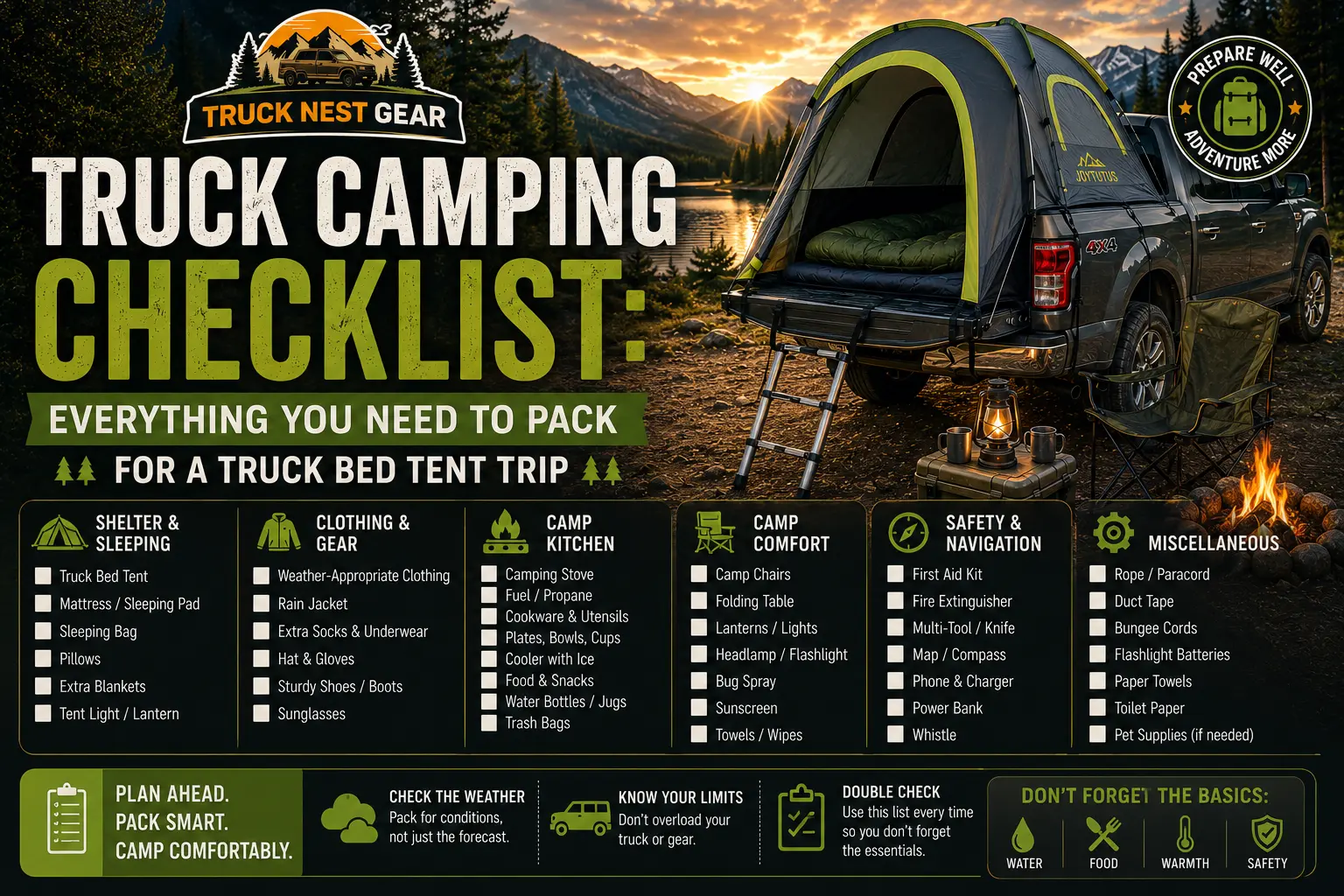
Generic camping checklists are written for car campers with a minivan and a developed campground pad. Truck bed tent camping is different in specific ways that a generic checklist does not address: the sleeping system is built around a metal truck bed, the shelter is the truck itself, the cooking operation often happens at the tailgate, and for dispersed camping, there is no camp store two minutes away when you forgot something.
This checklist is organized by category and calibrated for the truck bed tent format specifically. It covers every trip; a two-night weekend at a BLM site and a five-day overlanding trip share the same foundation. The extended trip sections note where additional gear applies.
Before packing, verify your payload. A loaded full-size truck bed tent setup, tent, gear, cooler, water, food, and two people can approach 500 to 800 pounds of cargo weight. Check your door jamb sticker for your specific truck’s payload rating before loading and prioritize accordingly.
Category 1: Shelter and Sleeping System
The shelter and sleeping system are the most truck-tent-specific items on this checklist. Get these right, and every other category is a supplement.
The tent itself:
- Truck bed tent matched to your specific bed size and confirmed for your truck’s year and cab configuration
- Rainfly, confirm it is in the bag and not still drying in the garage from your last trip
- All poles accounted for and shock cords intact
- Bed rail straps or clamps present and functioning
- Guy lines and ground stakes
- Pole repair sleeve
Sleeping surface:
- Closed-cell foam pad for the truck bed base layer; this is your thermal break from the metal bed, non-negotiable in anything below 60°F
- Insulated air pad or truck-specific air mattress on top of the foam base
- Sleeping bag rated at least 20°F below your expected overnight low; the metal bed factor means you need more rating buffer than a ground tent camper
- Sleeping bag liner for additional warmth and moisture management on multi-night trips
- Pillow
Sleeping clothing:
- Wool or synthetic moisture-wicking base layer top and bottom, no cotton
- Lightweight insulated mid-layer jacket and pants for sleeping in cool conditions
- Wool or fleece beanie
- Liner gloves for overnight use in temperatures below 40°F
- Wool or synthetic sleeping socks
Tent maintenance items (carry always, use when needed):
- DWR spray, apply before the trip if your tent is more than one season old
- Seam sealer, Gear Aid Seam Grip or equivalent
- Tent repair patches, adhesive patches for unexpected tears
- Zipper lubricant
Category 2: Cooking System
Heat source:
- Camp stove, liquid fuel stoves perform better than canister stoves in cold temperatures because canister pressure drops with temperature. For fall and winter trips, liquid fuel is the more reliable choice
- Fuel, more than you think you need. Cold temperatures and wind both increase fuel consumption significantly compared to summer use
- Stove repair kit or spare igniter
- Windscreen for canister stoves if that is what you run
Cookware:
- Pot sized for the number of people camping (1.5L minimum for two people)
- Frying pan or skillet if your meals require it
- Camp mug or insulated cup, metal, not plastic
- Spork or utensil set
- Cutting board; lightweight and collapsible options exist
- Camp knife or multi-tool with blade
- Pot gripper or heat-resistant glove
- Collapsible bowl if eating from the pot is not your preference
Food storage:
- Hard-sided cooler with a quality seal, or a 12V compressor cooler for multi-night trips; soft-sided coolers are not sufficient for bear country or rodent-active campsite areas
- Sealed hard-sided food storage bins for dry goods; rodents can chew through nylon bags and soft containers
- Bear canister or bear box if camping in designated bear-active areas
Cleanup:
- Biodegradable camp soap, Dr. Bronner’s or equivalent
- Two collapsible wash basins, one for washing, one for rinsing
- Camp towels or microfiber cloths
- Pot scrubber that will not damage non-stick surfaces
- Trash bag, more than you think you need
- Strainer for dishwater, strain food particles before dispersing gray water 200 feet from water sources
- Gray water container for pack-out on Leave No Trace-sensitive sites
Category 3: Water System
Water is the heaviest and most critical consumable. Plan for one gallon per person per day minimum for drinking and cooking, plus additional for washing.
Water supply:
- Water containers, rigid or collapsible jugs totaling your planned daily requirement plus a 20 percent buffer
- For dispersed camping away from water sources: bring all water you plan to use. Do not rely on finding water at the site
- For camping near water sources: water filter or purification system, Sawyer Squeeze, Katadyn BeFree, or SteriPen UV purifier are all reliable and compact options. Never drink directly from streams or rivers without treatment
Water storage:
- Fill containers before departing from the last known clean water source
- Store water containers in the truck cab or in the shade; truck bed temperatures can reach well above ambient temperature in summer, direct sun
Category 4: Lighting
Personal lighting:
- Headlamp, primary personal lighting. Must be hands-free. A headlamp with a red light mode preserves night vision and is required for any campsite near active wildlife or hunting activity
- Backup headlamp or flashlight with fresh batteries
- Extra batteries or a charged USB battery bank for rechargeable headlamps
Camp lighting:
- LED lantern for the tent interior and cooking area
- LED strip lights for the truck bed tent interior; adhesive-backed USB strips are lightweight and transform the tent interior
- Solar lantern for extended trips, charges during the day, provides ambient light at night without battery drain
Category 5: Power System
The truck bed tent format has a built-in power advantage that most campers underuse: the truck’s electrical system. The cab access panel on premium tent models like the Napier Sportz 57 Series connects the tent interior to the truck’s interior, allowing a cord from the truck’s power outlet to run into the tent.
Vehicle power:
- 12V power inverter for the truck cab outlet if you need standard AC power
- USB charging cables for phones, headlamps, and devices
- 12V cooler cable if running a compressor cooler off the truck
Portable power:
- Portable power station (500Wh to 1,000Wh) for multi-night trips, powers the fan, the air mattress pump, charging, and LED lighting without running the truck engine
- 100W folding solar panel for extended trips, pairs with the power station for indefinite off-grid power
Camp-specific:
- Portable camping fan with USB or battery power, essential for condensation management in warm weather and useful even in fall for moisture control
- Electric air mattress pump, most truck-specific air mattresses include one, but confirm before departure
Category 6: Navigation and Communication
Navigation:
- Downloaded offline maps for your destination area before departure; cell coverage is unreliable on BLM and Forest Service land. Google Maps, Maps.me, or Gaia GPS all allow offline downloads
- Paper maps or a printed topo for the specific area if you are going into unfamiliar terrain
- Compass, backup to digital navigation
Communication:
- Fully charged phone
- Satellite communicator for dispersed camping without cell coverage, Garmin inReach Mini, SPOT, or a PLB. In a snakebite, vehicle recovery, or medical emergency on a remote dispersed site, this is the device that calls for help
- Emergency contact plan: someone outside the trip who knows your destination, planned campsites, and expected return date
Category 7: First Aid and Safety
First aid kit essentials:
- Adhesive bandages in multiple sizes
- Gauze pads and medical tape
- Antiseptic wipes and antibiotic ointment
- Moleskin for blister management
- Pain reliever and antihistamine
- Tweezers, for splinters, thorns, and tick removal
- Tick removal tool
- Nitrile gloves
- Emergency mylar blanket
- Any personal prescription medications plus a small supply buffer
Safety gear:
- Fire extinguisher, a compact dry chemical extinguisher stored accessible in the truck cab
- Whistle
- Signal mirror
- Knife or multi-tool
- Lighter and waterproof matches, redundant fire-starting capability
Wildlife safety:
- Bear spray if camping in bear-active terrain, EPA-registered formulations with at least 7.9 oz of active ingredient
- Snake bite guidance card if camping in venomous snake habitat
- Blaze orange vest and hat for fall hunting season camping
Category 8: Vehicle and Recovery Gear
A truck bed tent camping trip, especially on dispersed BLM and Forest Service roads, puts you on road surfaces that may be rougher, softer, or more remote than your daily driving. Vehicle preparedness is camping preparedness.
Basic vehicle items:
- Full fuel tank plus knowledge of the next fuel source
- Spare tire confirmed inflated and accessible
- Tire iron and jack rated for your truck’s weight
- Jump cables or portable jump starter; battery-powered jump starters are more practical than cables on a solo trip
- Basic tool kit: adjustable wrench, screwdrivers, pliers, zip ties, duct tape, baling wire
For dispersed and backcountry camping:
- Traction boards, MaxTrax, TRED Pro, or equivalent, for soft soil, sand, and mud recovery
- Recovery strap rated for your truck’s gross vehicle weight
- Hi-Lift jack or bottle jack for use on uneven terrain
- Shovel, folding camp shovel for camp use doubles as recovery equipment
- Air compressor, portable 12V compressor for re-inflating tires after airing down for off-road traction
Category 9: Campsite and Comfort Items
Campsite setup:
- Camp chairs, one per person
- Folding table or tailgate table that mounts to the lowered tailgate
- Ground tarp or footprint for the area beneath the truck
- Tarp for shade or additional rain coverage over the campsite
- Paracord, multiple uses including tarp rigging, gear hanging, and emergency
Campfire:
- Fire pan, required on much BLM land, good practice everywhere
- Lighter and matches
- Fire starters for wet or cold conditions
- Water bucket or collapsible container for fire extinguishing
- Campfire grate if your cooking involves fire rather than a stove
Hygiene:
- Toilet paper, pack out all TP on dispersed camping land
- Waste bag system for solid waste pack-out on LNT-sensitive sites
- Hand sanitizer
- Camp trowel for cathole digging on dispersed sites
- Solar shower bag for multi-night trips
- Microfiber camp towel
Clothing (general):
- Moisture-wicking base layers
- Insulating mid-layer
- Wind and rain shell, waterproof, not just water-resistant, for sustained rain
- Camp shoes or sandals for use around the campsite
- Sturdy closed-toe footwear for any hiking or field activity
- Sun protection: hat, sunscreen, sunglasses
The Pre-Departure Check: Five Minutes That Prevent Most Forgotten Items
Run through this specific check the morning of departure, not the night before when you are tired:
Tent: Is it in the truck? Is the rainfly in the bag? Are all poles accounted for?
Sleeping bag: Is it in the truck and not still in the bedroom?
Water: Are the containers filled?
Food: Is all food in hard-sided sealed containers?
Phone: Is it charged, and are offline maps downloaded for the destination?
Satellite communicator: Is it charged and is the subscription active?
Truck: Is the spare tire inflated? Is the fuel tank full?
Fire: Are current fire restrictions checked for your specific destination land unit?
Five minutes on this check catches the items that a longer pre-packing review misses because they are so obvious they feel impossible to forget, until they are sitting on the kitchen counter while you are two hours down the road.
A Note on Payload and Packing Priority
Everything on this checklist has been selected for the truck bed tent camping context, but no truck can carry everything on a single trip without approaching its payload limit. The gear priority order when weight becomes a constraint:
Non-negotiable: Shelter, sleeping system with appropriate temperature rating, water, first aid, navigation and communication, vehicle basics.
High priority: Cooking system, lighting, power basics.
Context-dependent: Recovery gear (required for remote dispersed camping, less critical for developed campground trips), campfire gear (check restrictions before adding fire pan and wood), extended comfort items.
A well-packed truck bed tent setup for a two-night weekend trip should weigh under 300 pounds of gear total for two people. A five-day dispersed camping trip with a 12V cooler, portable power station, and recovery gear will be heavier. Know your truck’s payload rating and stay within it.