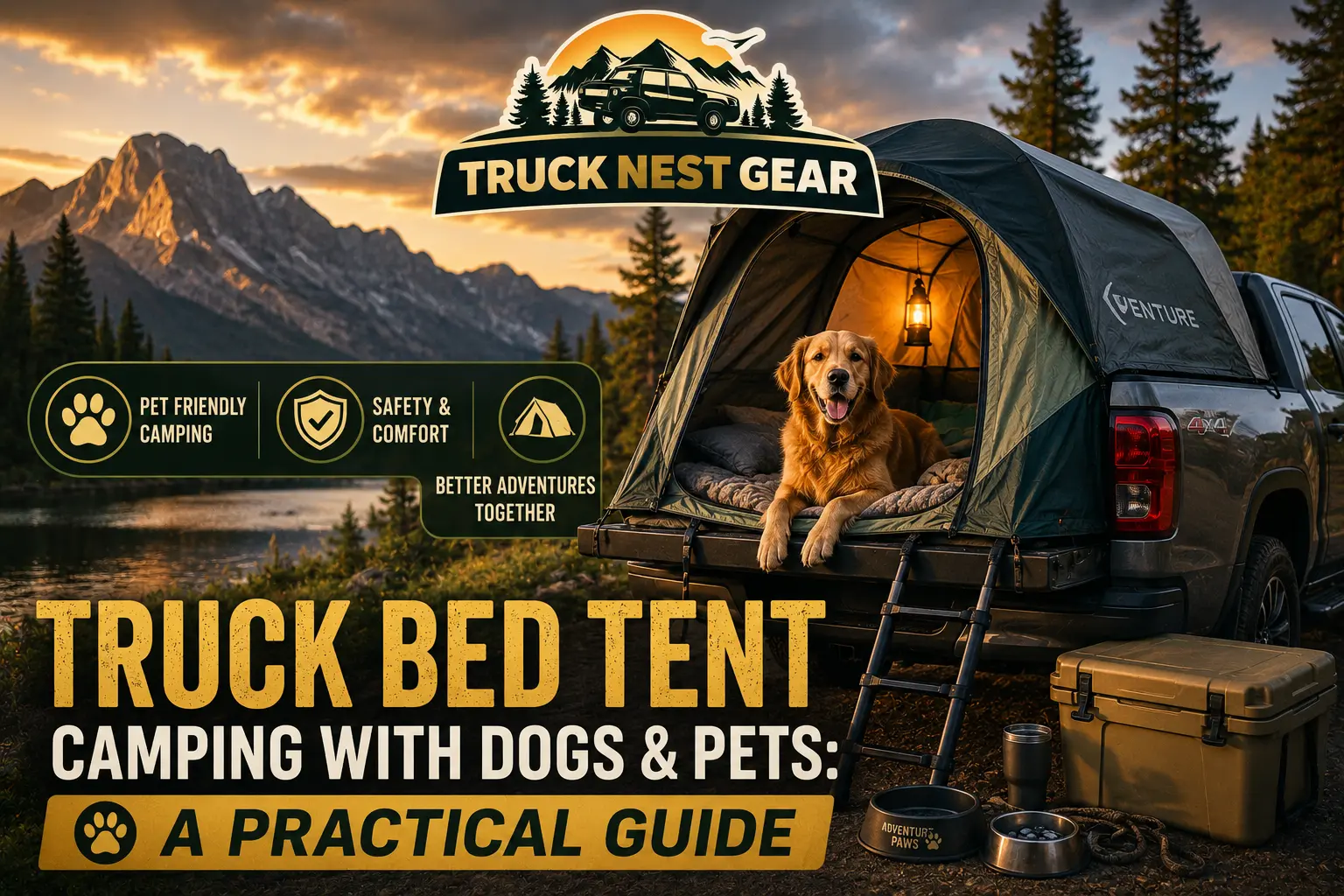
Truck Bed Tent Camping With Dogs and Pets: A Practical Guide
More than half of campers brought their dogs on camping trips in 2023, according to data from The Dyrt’s annual camping report. That number is not surprising to anyone who has tried to leave a dog at home while packing camping gear; the look alone is enough to reconsider.
Truck bed tent camping with dogs is genuinely practical, and in several specific ways, it is better suited to dogs than ground tent camping. But it also introduces logistics, space constraints, and safety considerations that are worth thinking through before the first trip rather than during it.
This guide covers the honest realities of bringing your dog on a truck tent camping trip, what works, what does not, and what you need to plan for.
Why Truck Bed Tent Camping Works Well for Dogs
The advantages start before you even set up the tent.
A pickup truck is a better vehicle for camping with a dog than most alternatives. The dog rides in the cab or in a secured truck bed on the way to the campsite. On arrival, the truck bed becomes a familiar, elevated platform above the ground insects, the wet grass, and the soil that carries parasites and ticks. A dog that sleeps in a truck bed tent is off the ground in the same way you are, which reduces exposure to the same ground-level environmental hazards.
The truck bed’s walls also create a contained space that is easier to manage than an open ground tent for dogs that move at night. A dog that repositions, stretches, or wants to check on you in the middle of the night has a defined boundary, the truck bed sides, rather than a fabric tent floor that can be pushed against, collapsed, or unzipped.
For hunters specifically, the combination of a camo truck tent and a working dog is a natural fit. The cab access panel on premium models like the Napier Sportz 57 Series allows a power cord to run from the truck’s interior into the tent, useful for a heated blanket on cold pre-dawn mornings that benefit both you and a hunting dog sleeping nearby.
The Honest Limitations
None of this is without trade-offs, and the trade-offs are specific to the sleeping space.
Space is the primary constraint. A standard truck bed tent sleeps two adults in reasonable comfort. Adding a medium to large dog means one of two things: either someone is less comfortable, or you choose your tent size and mattress configuration specifically around accommodating the dog. A large dog in a 5-foot short-bed tent with two adults is tight. The same dog in a 6.5-foot or 8-foot bed tent has more room to settle without disrupting everyone’s sleep.
Dog nails damage tent floors. This is the most consistent complaint from truck tent campers who bring dogs, and it is entirely preventable with one piece of planning. A dog moving around on a tent floor in the middle of the night, jumping in and out, or repositioning while dreaming will eventually puncture or wear the fabric if nothing is between their nails and the floor. A simple solution: a moving blanket, an old sleeping bag, or a dedicated dog mat laid over the tent floor beneath where the dog sleeps.
A wet dog is its own logistical category. A dog that has been in a lake, a creek, or a muddy trail before bed brings all of that into the sleeping space. Having a dedicated dog towel or a camp-specific absorbent mat at the tailgate entry point, and taking a few minutes to dry and inspect the dog before they enter the tent, makes the difference between a comfortable night and a wet, muddy sleeping bag by morning.
Before the Trip: What Needs to Be Done
The pre-trip preparation for camping with a dog involves more than packing an extra water bowl.
Veterinary check and parasite prevention. All dogs need to be vaccinated, microchipped, and up to date on parasite prevention before camping. This is not a technicality; the outdoor environment that makes truck camping appealing is also home to ticks, fleas, mosquitoes that carry heartworm, and wildlife that can transmit leptospirosis and other diseases. Talk to your vet specifically about the region you are heading to. Tick-borne diseases vary significantly by geography, and Lyme disease prevention, in particular, is worth discussing if you are heading to the Northeast, upper Midwest, or Pacific Coast.
Rabies vaccination and paperwork. Most campgrounds that allow dogs require proof of current rabies vaccination. Some national park campgrounds are strict about this. Have a copy of your dog’s vaccination records in the truck.
Identification. A microchip is the baseline, but a collar with a current ID tag and phone number is what gets your dog back to you quickly if they slip away in an unfamiliar environment. A GPS tracking collar, an AirTag in a collar attachment, or a dedicated dog GPS tracker is worth considering for any dispersed camping where the dog might range farther from the truck.
A dry run at home. If your dog has never slept in a truck bed tent, one night in your driveway tells you everything: whether they will settle in the confined space, whether they will disturb your sleep by repositioning, and whether they can get in and out of the tailgate entry comfortably. Finding this out in your driveway is significantly more useful than finding it out at a campsite four hours from home.
Campground Rules: What to Check Before You Arrive
Dog policies vary more than most campers expect, and showing up at a campsite with a dog that is not allowed there is a situation worth avoiding.
Most National Forest and BLM dispersed camping areas allow dogs without formal restrictions, though leash requirements on national forest land vary by ranger district. The Bureau of Land Management generally allows leashed dogs on BLM land. National parks are more restrictive; dogs are often limited to developed campground areas and are not permitted on most trails. Verify the specific rules for each unit before your trip rather than assuming a general policy applies everywhere.
Developed campgrounds, national park campgrounds, state park sites, and private campgrounds typically require dogs to be leashed at all times and kept inside your vehicle or tent at night. Many also have breed or size restrictions. A quick phone call or check of the campground’s specific pet policy page before booking eliminates arrival-day surprises.
The Sleeping Arrangement Question
Whether and how your dog sleeps in the tent with you is the central logistics question of truck bed tent camping with a dog, and the answer depends on the dog, the tent size, and how lightly you sleep.
For smaller dogs under about 30 pounds, sleeping in the truck bed tent alongside you is generally straightforward. They occupy minimal floor space, generate useful warmth in cooler temperatures, and are light enough that their movement does not significantly disturb sleep. A dedicated dog blanket or sleeping pad section keeps them on their own surface rather than on yours.
For medium dogs between 30 and 60 pounds, the tent size matters more. In a 6.5-foot or 8-foot bed tent, a medium dog can find a position that works without crowding two adult campers significantly. In a 5-foot short-bed tent, it is genuinely tight and worth evaluating on the dry run whether everyone can comfortably share the space.
For large dogs over 60 pounds, you have two realistic options: a long-bed truck with a larger tent, or the dog sleeps in the truck cab at night. The truck cab is not a bad option; it is secure, weatherproof, and familiar territory for most dogs. In moderate temperatures with a window cracked, the cab is comfortable for a dog through the night. In hot weather, however, a dog should never be left in a closed vehicle, even with windows cracked, and this applies at the campsite just as much as it does in a parking lot.
Gear That Actually Makes a Difference
The camping gear market for dogs has grown substantially, and some of it is genuinely useful rather than optional extras.
Dog boots or paw protection. Not for hiking, for the tent floor. A dog wearing soft, flexible dog socks or camp-specific boots causes zero floor damage regardless of nail length. This is the cheapest and most effective solution to the nail-and-tent-floor problem.
A dedicated camp dog bed or pad. Something the dog recognizes from home creates a consistent sleeping signal, the dog knows where their spot is in an unfamiliar environment. Lightweight folding camp dog pads exist specifically for this use case and pack flat alongside your other gear.
A tie-out or long line for camp. A 20- to 30-foot lightweight cable tie-out or a long training line gives your dog meaningful freedom to explore the campsite without being loose. This is more comfortable for the dog than a short 6-foot leash attached to your wrist and safer than full freedom in an unfamiliar environment where wildlife, other campers, and road hazards exist.
A collapsible water bowl and extra water. Dogs require more water during outdoor activity than they do at home, and water sources at dispersed campsites are not always clean. Never allow your dog to drink from streams, rivers, or standing water unless it has been filtered or treated to prevent the transmission of waterborne pathogens. Carry enough clean water for the dog in addition to your own supply.
A pet first aid kit. A basic kit should include gauze, bandaging material, antiseptic wipes, tweezers for tick removal, antihistamine tablets (confirm dosage with your vet before the trip), and a copy of your vet’s emergency contact number. A tick removal tool is worth adding. Specifically, ticks on dogs in wooded and brushy environments need to be removed promptly and completely.
Wildlife Awareness: What Changes When a Dog Is With You
A dog at a campsite changes the wildlife dynamic in both directions.
On the protective side, a dog, particularly a larger one, deters some wildlife from approaching the campsite. Many experienced dispersed campers specifically value having a dog along for this reason in bear country and areas with other large predator activity.
On the risk side, a dog at a campsite can attract wildlife that might otherwise pass through without stopping. A dog that barks at wildlife, chases squirrels or deer, or investigates unfamiliar smells in the brush is a dog that is actively engaging with an environment that can bite back. Rattlesnakes are the most significant risk in the Southwest and Rocky Mountain regions; a dog moving through brush nose-first is more likely to get close to a snake than a human looking where they step. Keep dogs on leash in snake-active environments and inspect them after any off-leash time in dense cover.
Bear country adds its own considerations. Food storage rules in designated bear areas apply to dog food as much as human food. Bears are attracted to dog kibble, treats, and any food odor. Store dog food in the same bear-safe container or hung cache as your own food, not loose in the truck bed.
Daily Campsite Routines That Make a Difference
A few habits at the campsite make multi-night dog camping significantly smoother.
End-of-day inspection. Before your dog enters the tent for the night, check them thoroughly from nose to tail, through the coat for ticks, between the paw pads for thorns and foxtails, and around the ears for burrs and debris. Foxtails, in particular, can work their way through skin and cause serious infections if not caught early. A two-minute inspection at the end of each camp day catches these before they become a problem.
Paw check after wet crossings. If your dog has crossed any streams or walked through standing water, check their paws and dry them before they get into the tent. Wet paws on a sleeping surface create a cold, damp environment through the night.
Pick up waste every time. This is both a courtesy to other campers and a Leave No Trace requirement on public land. Carry enough waste bags for the full trip, plus extra; running out is a planning failure that affects other people’s campsite experience.
The Right Dogs for Truck Tent Camping
Not every dog is well-suited to camping, and recognizing this honestly makes the decision easier.
Dogs that do well at truck campsites are generally those that are comfortable in unfamiliar environments without becoming anxious or reactive, respond reliably to basic commands even with distractions, and can settle and sleep in a confined space at night. Dogs that bark persistently at sounds, struggle with anxiety in new environments, or have never spent a night outside their home routine may find camping stressful rather than enjoyable, which makes it stressful for everyone.
A backyard overnight is the most useful test before a real camping trip. If your dog settles comfortably in a sleeping space near you outside their normal environment, they will likely do fine at a campsite. If they pace, whine, and are unable to settle in the yard, a dispersed campsite four hours from home is not going to go better.
For dogs new to camping, starting with a developed campground close to home, where you can drive home if things go wrong, is a lower-stakes first trip than a remote dispersed site with no cell coverage.